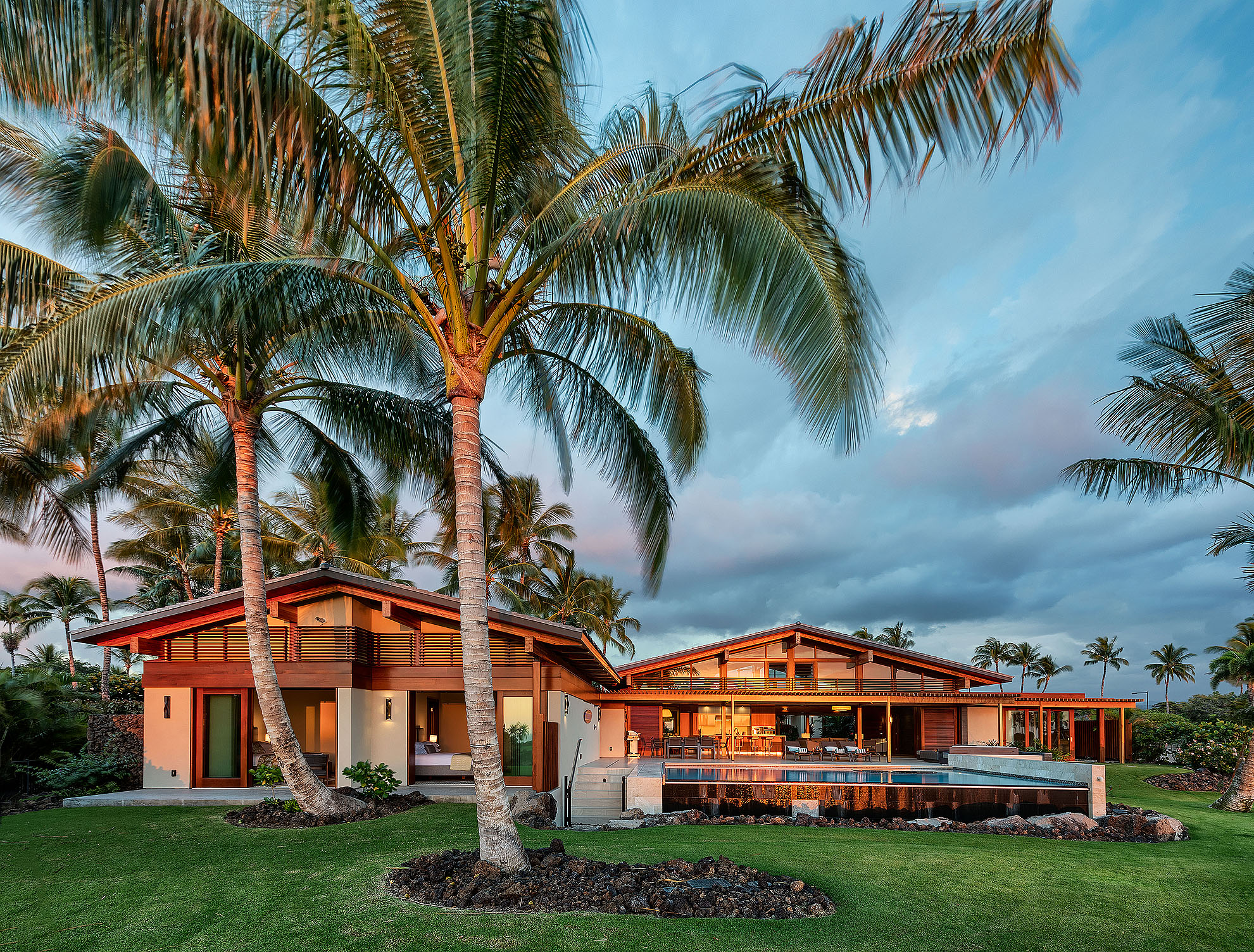
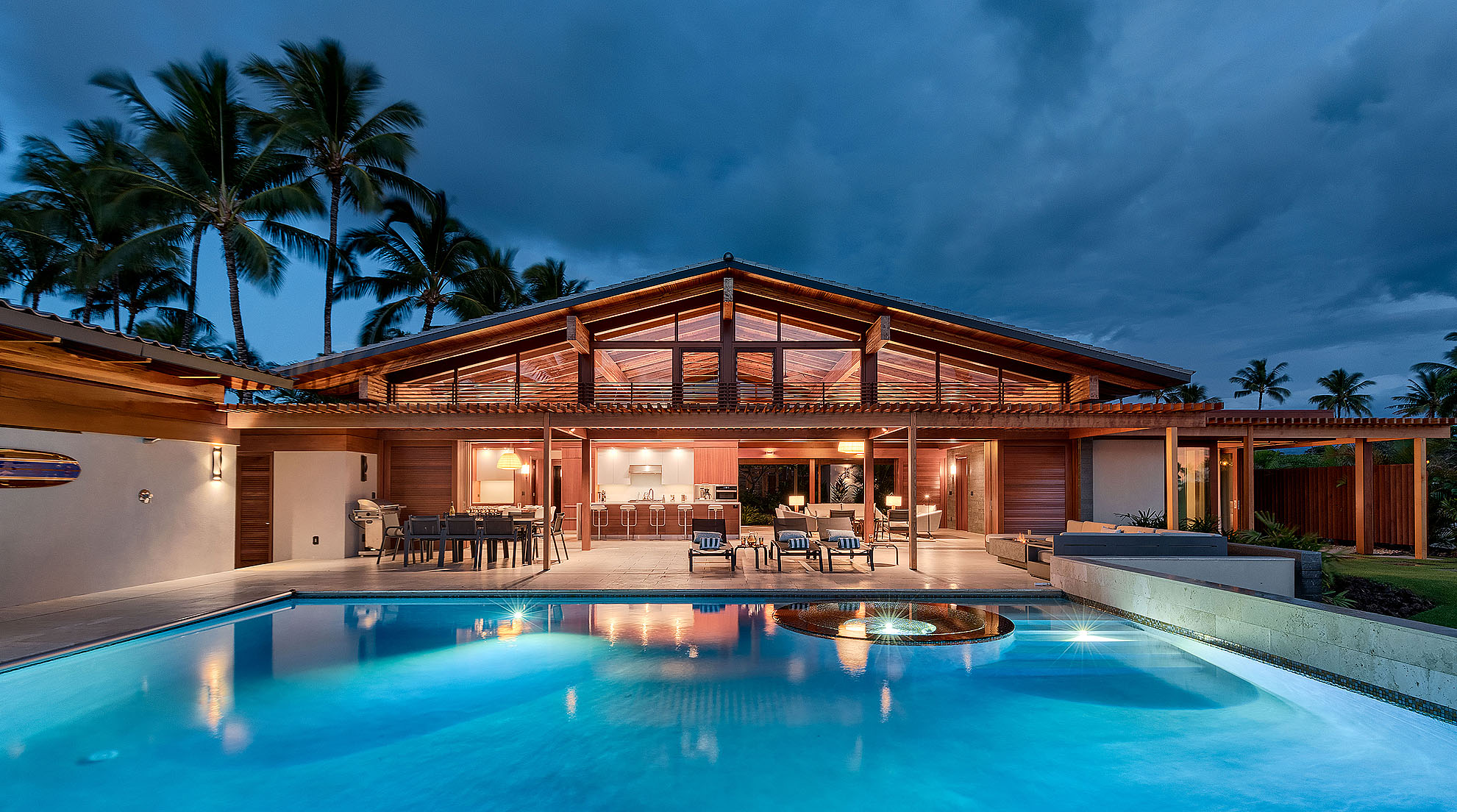
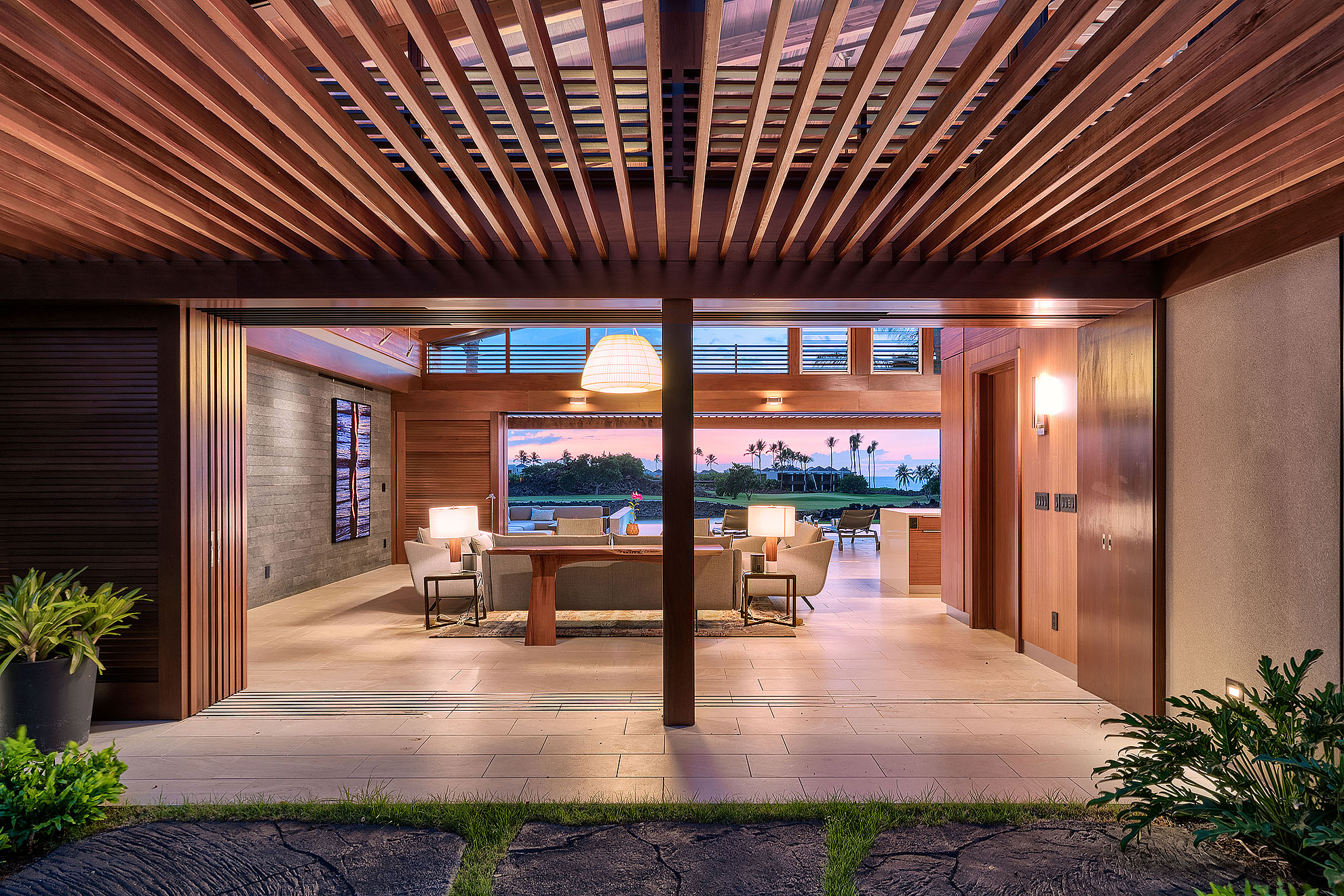
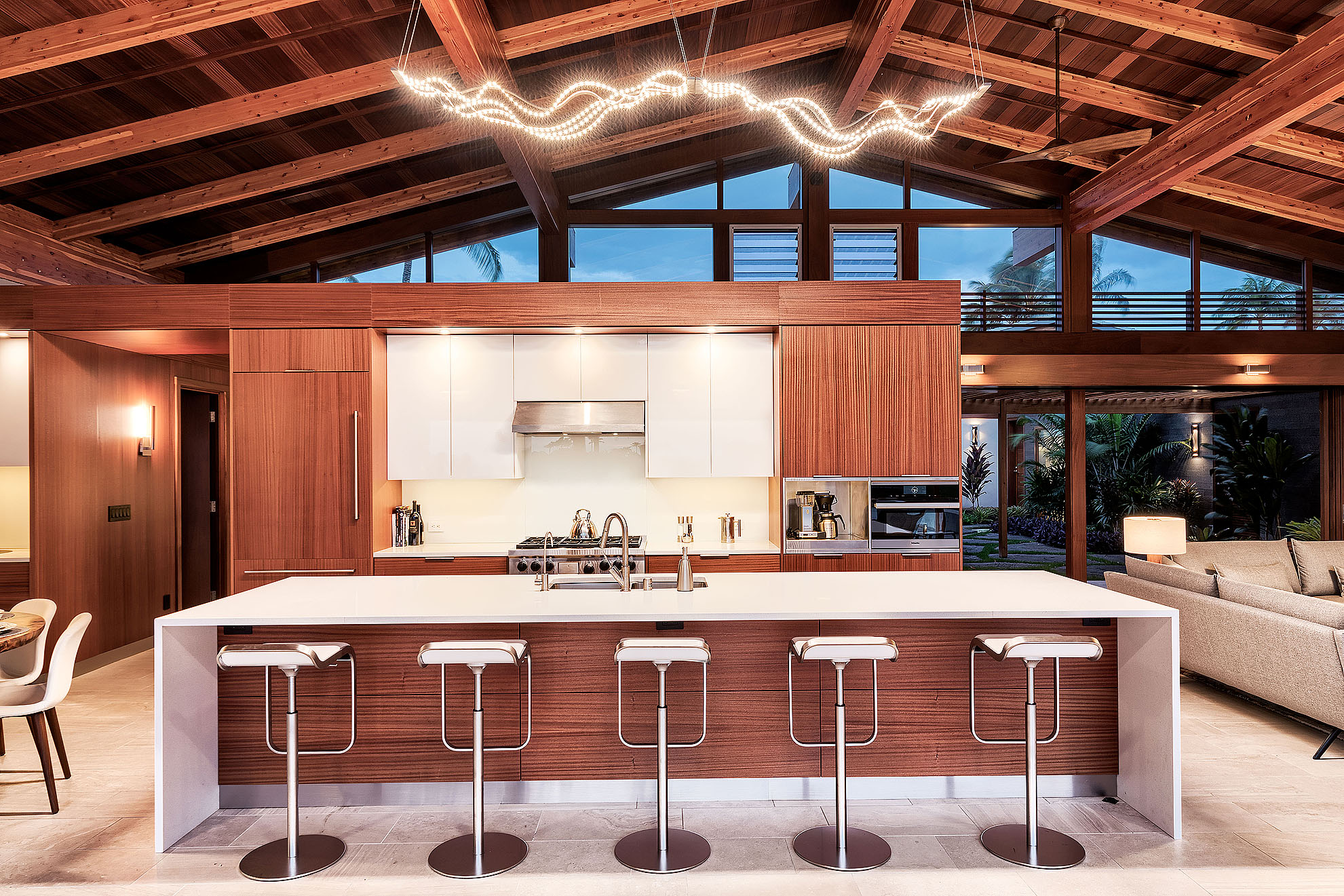
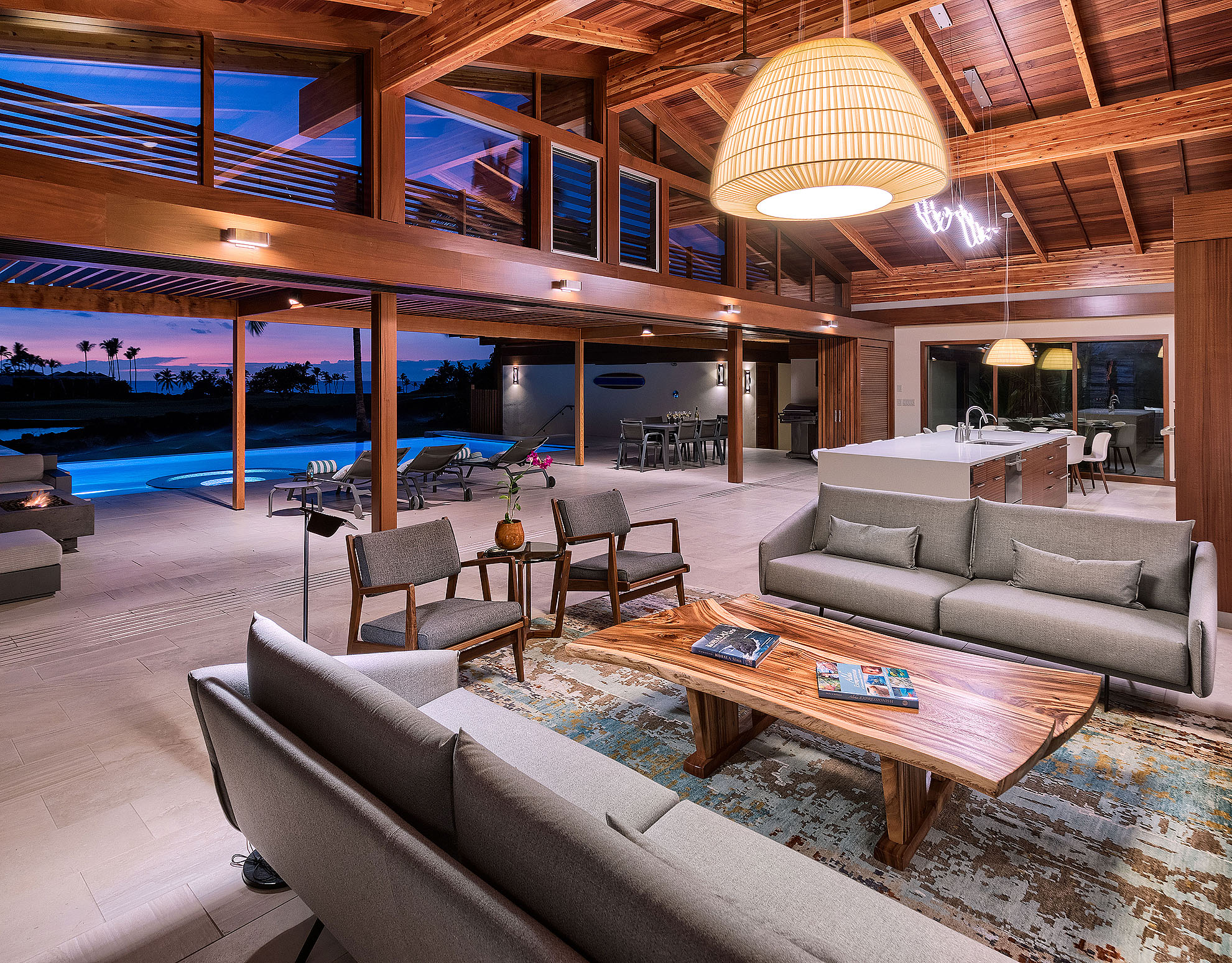
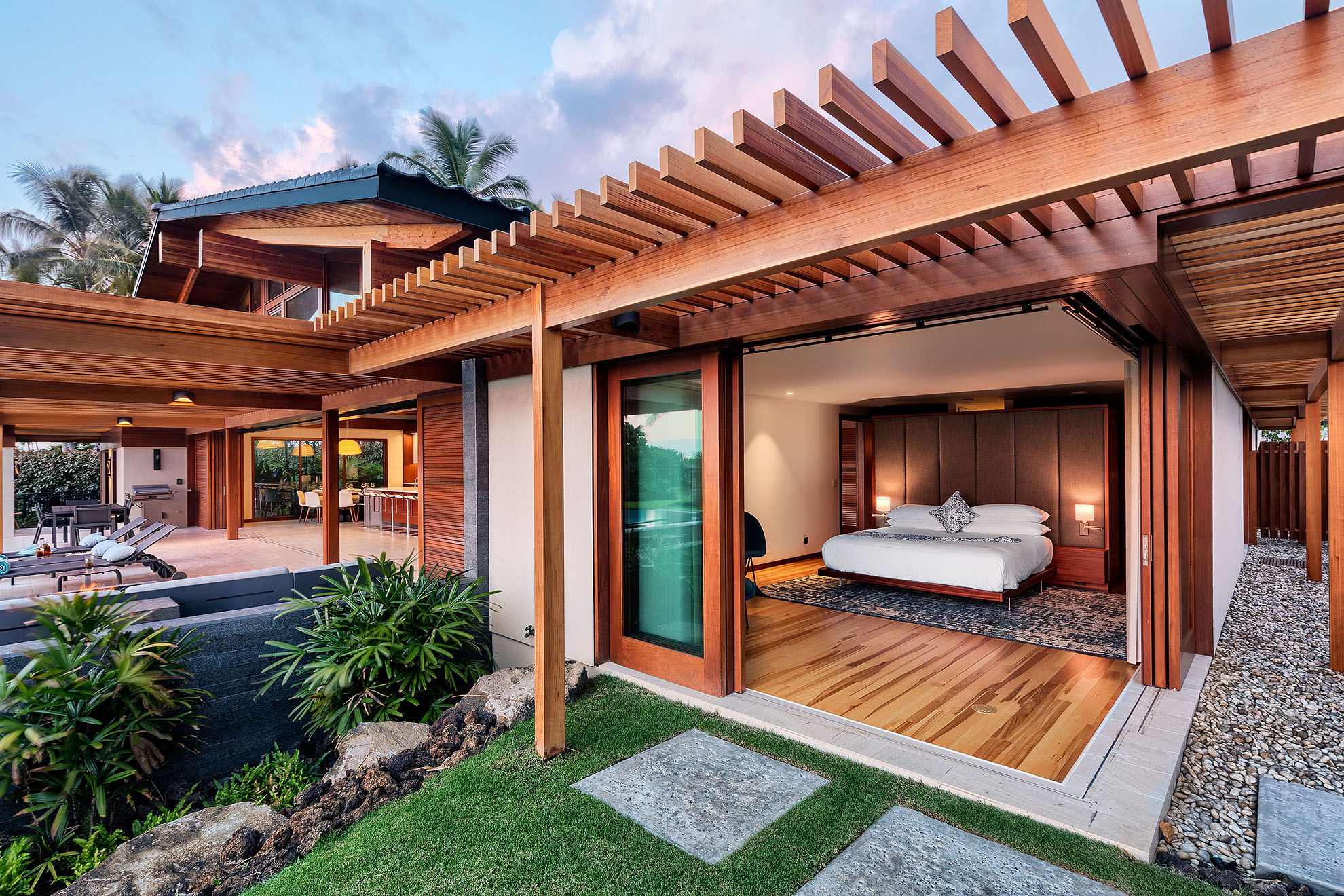
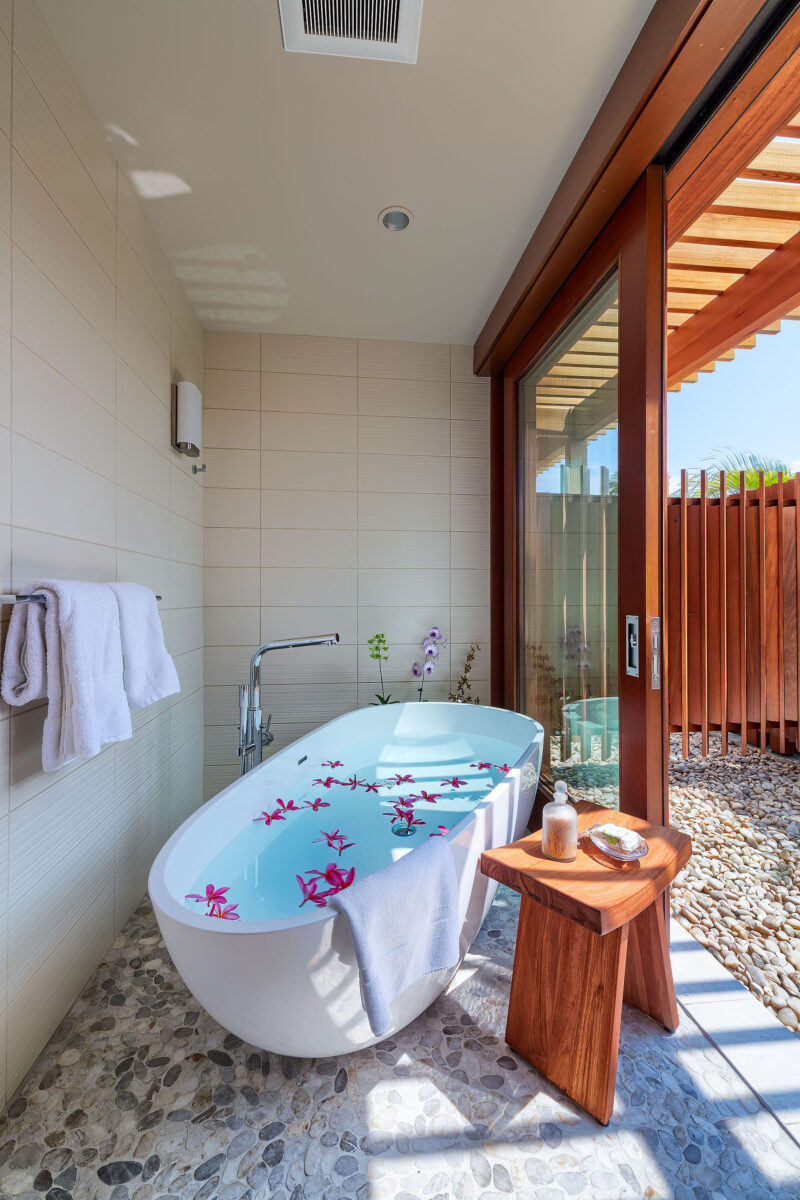
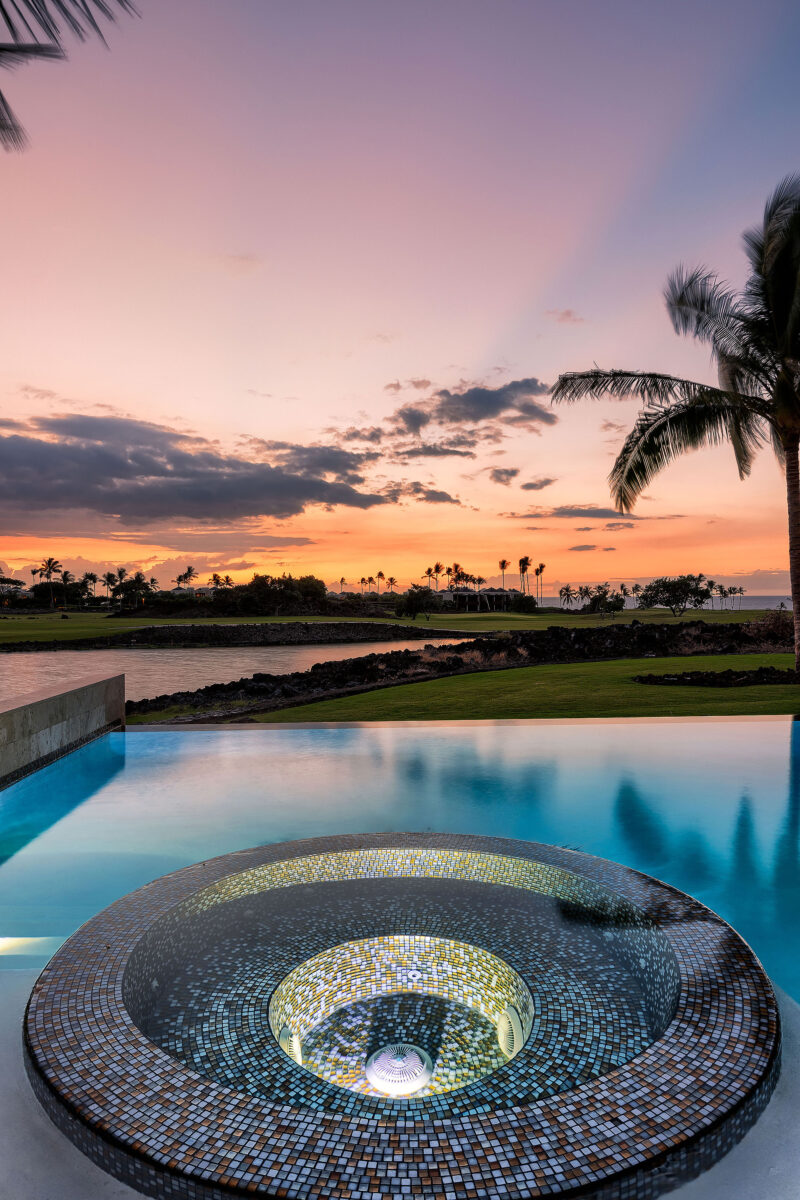
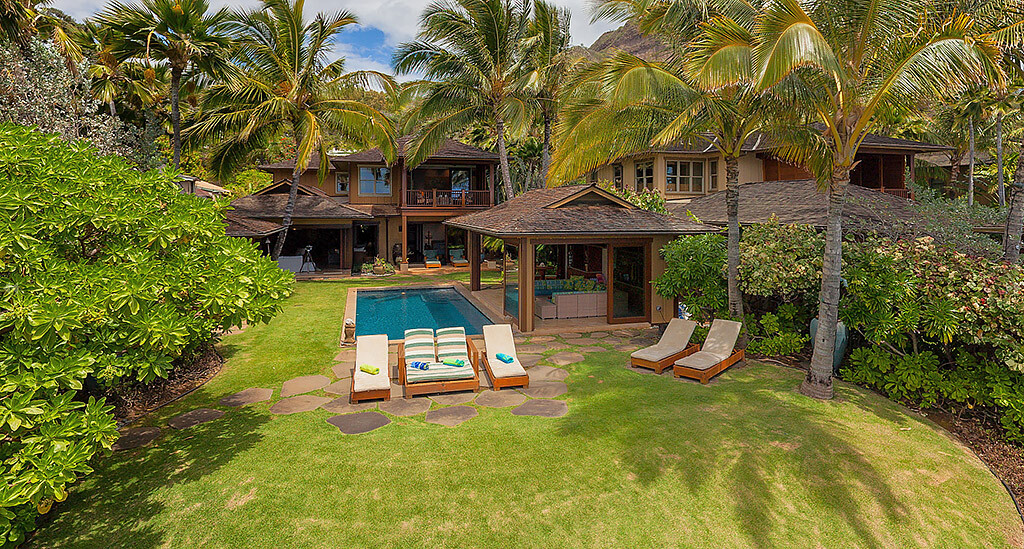
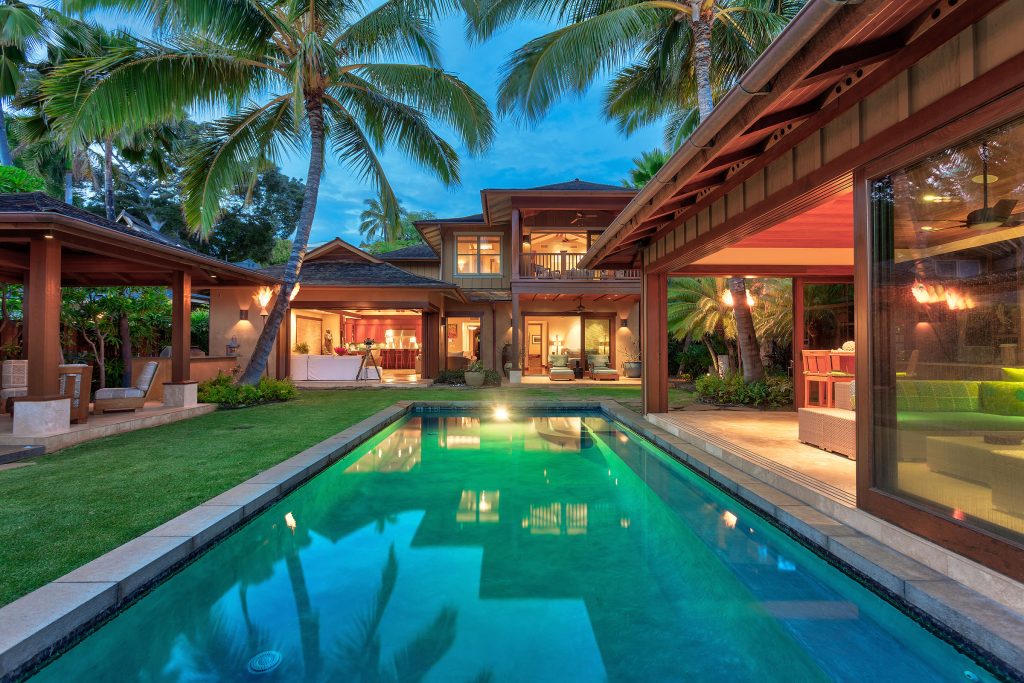
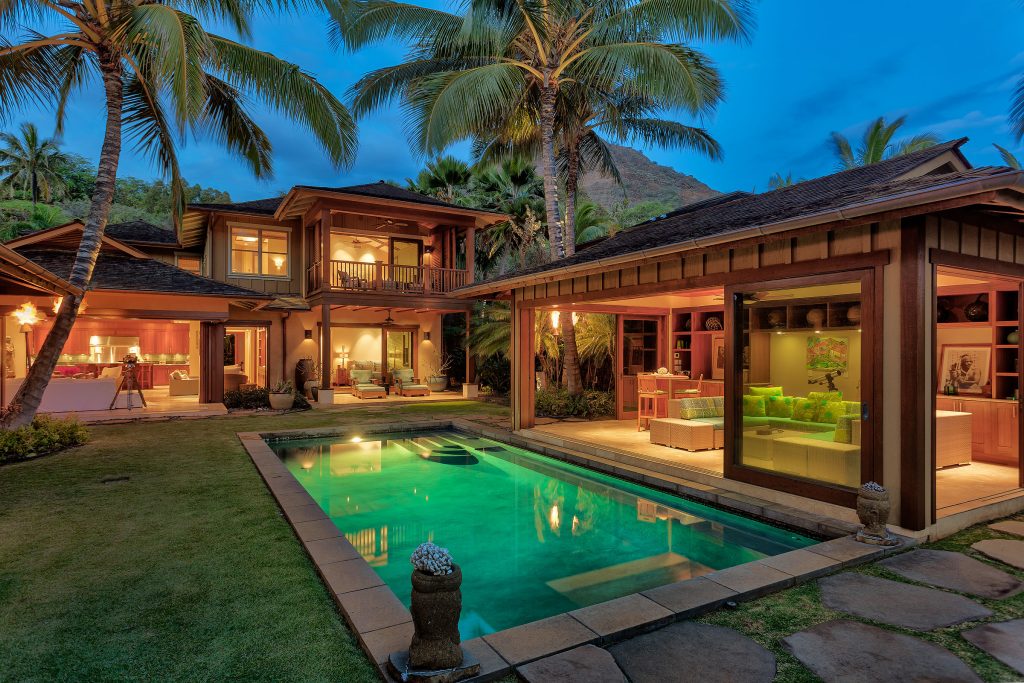
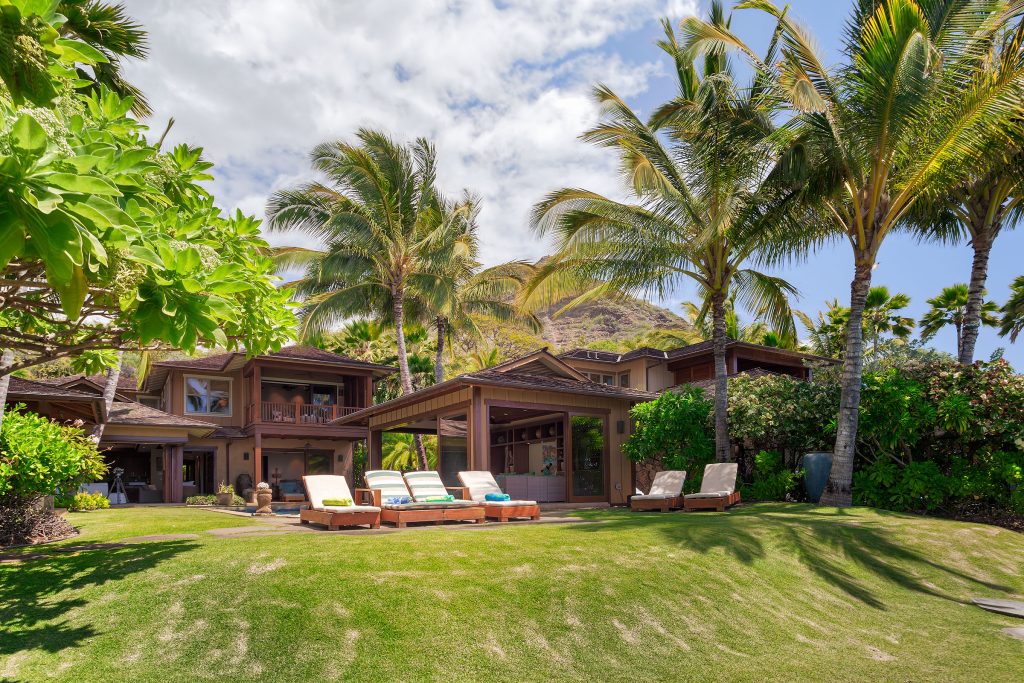
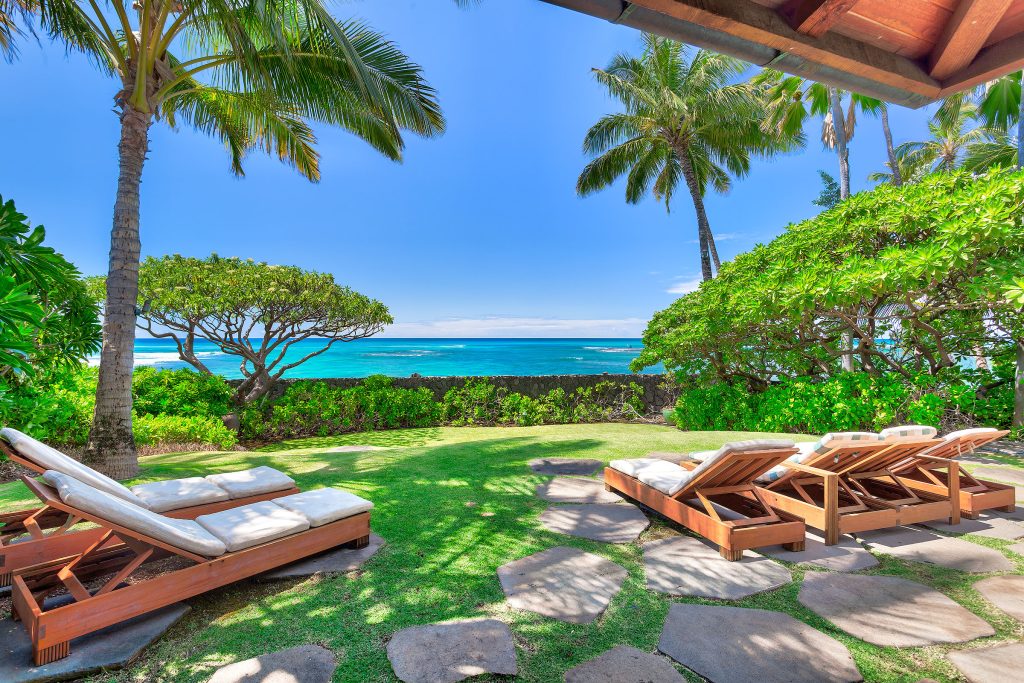
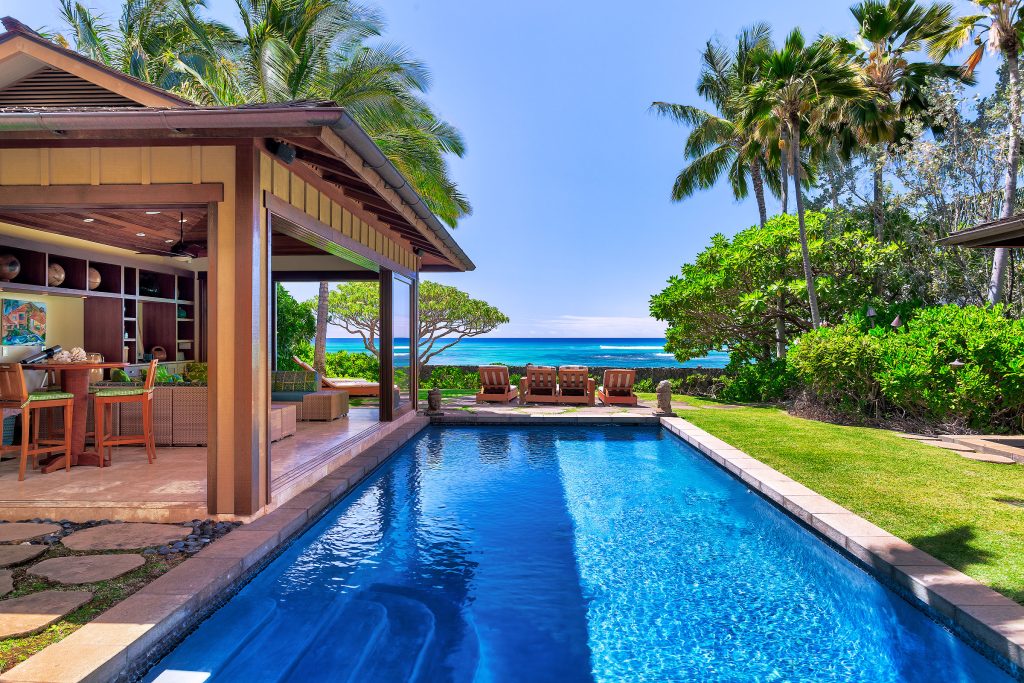
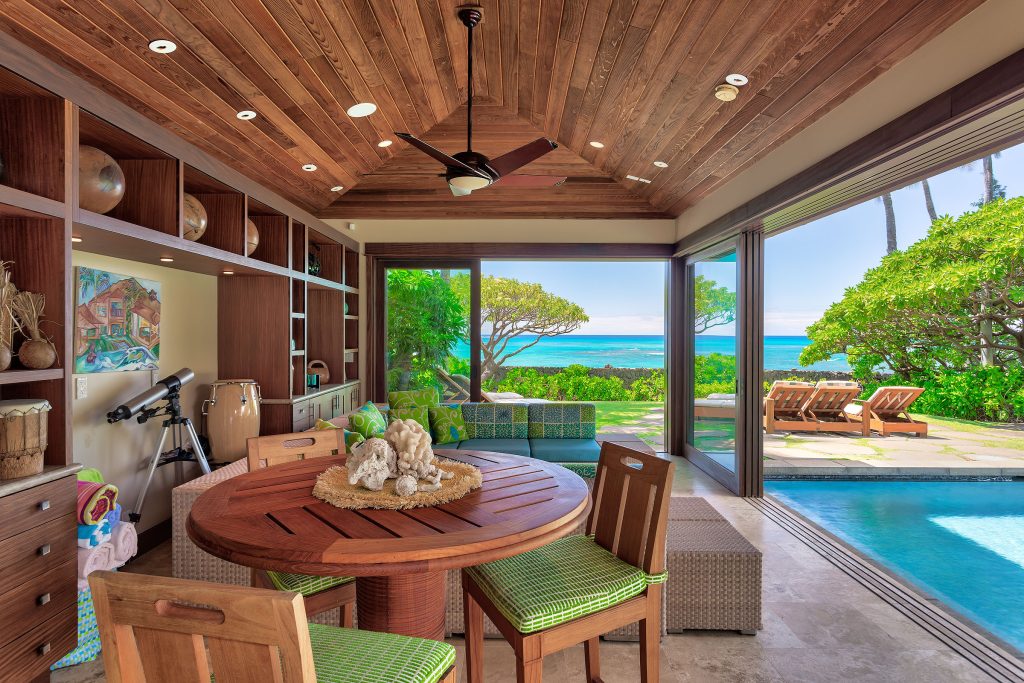
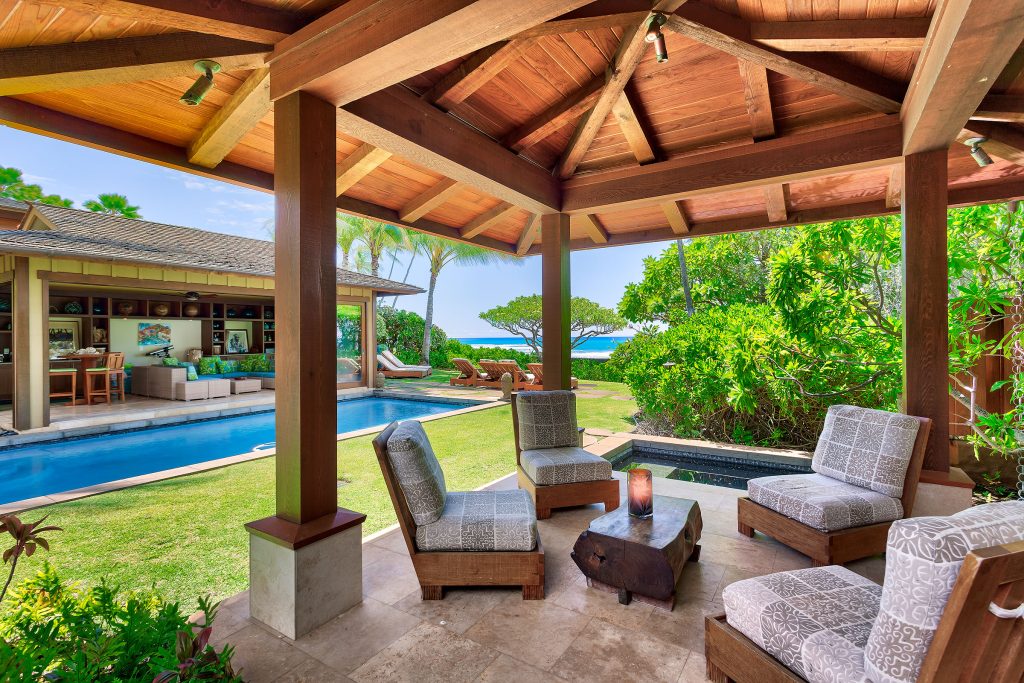
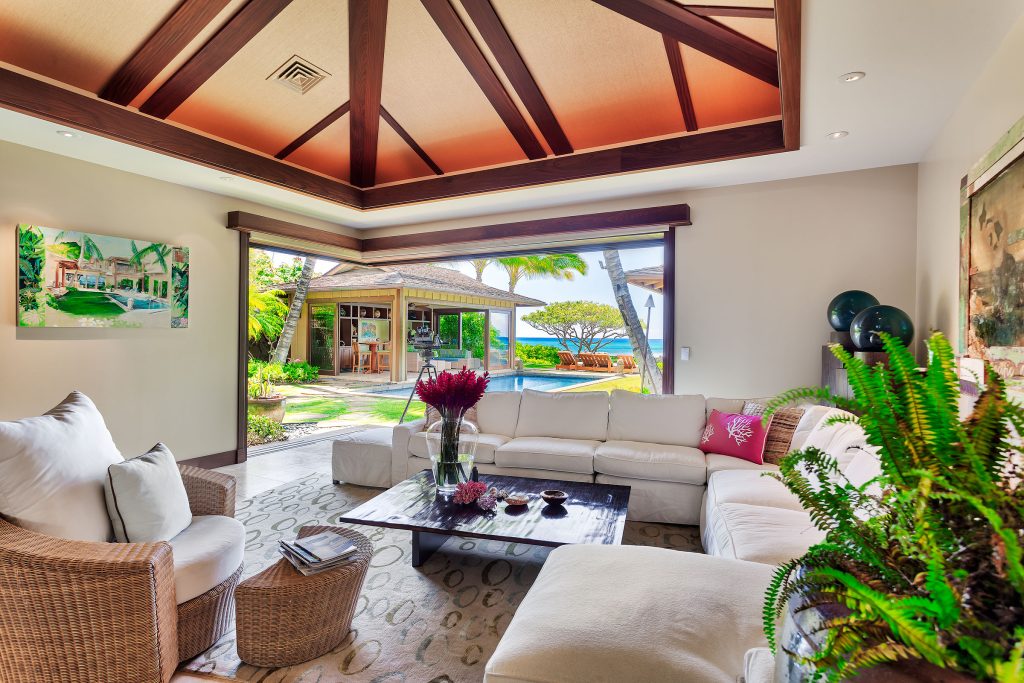
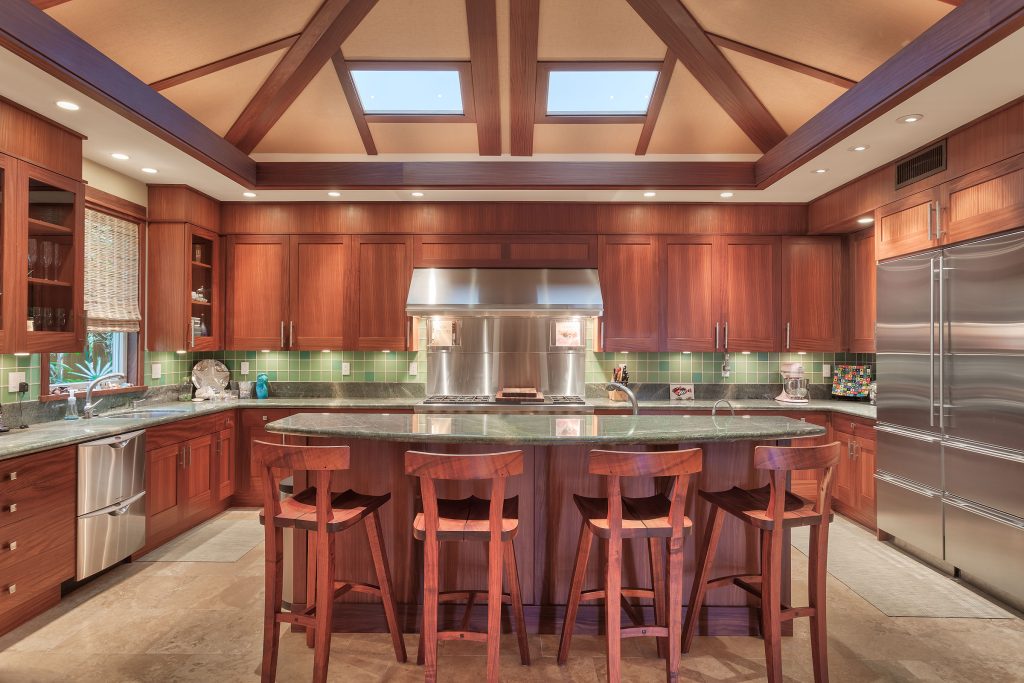
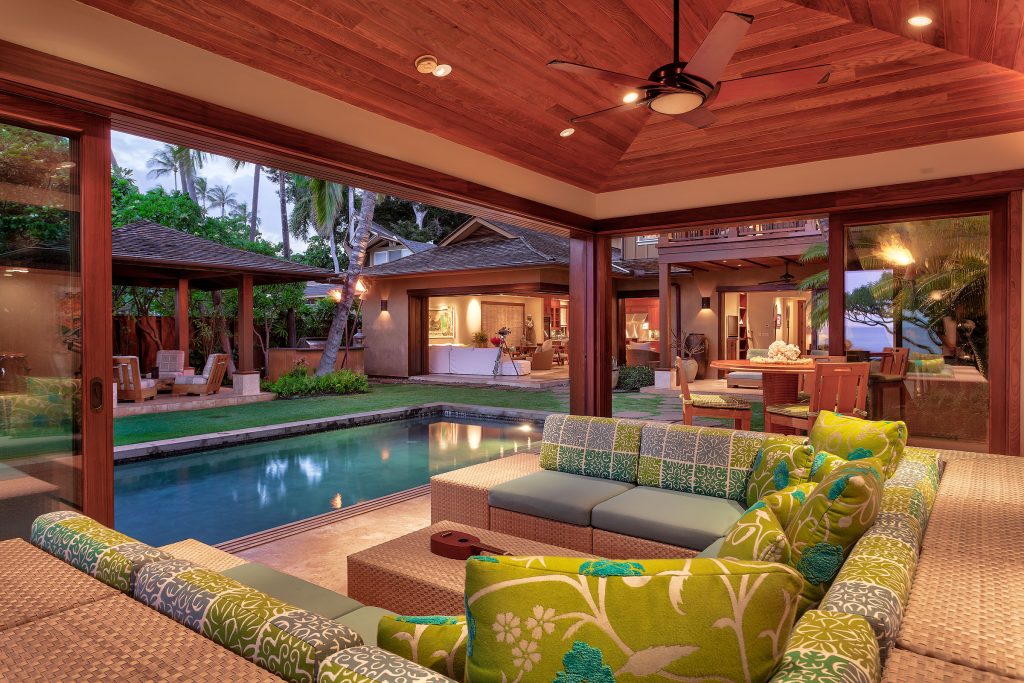
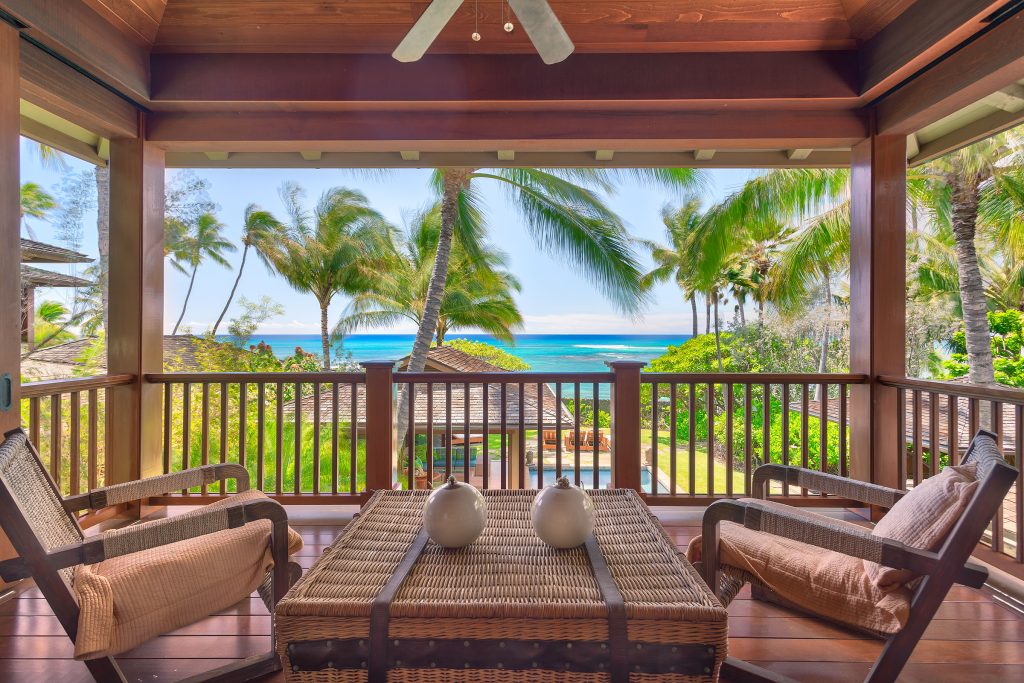
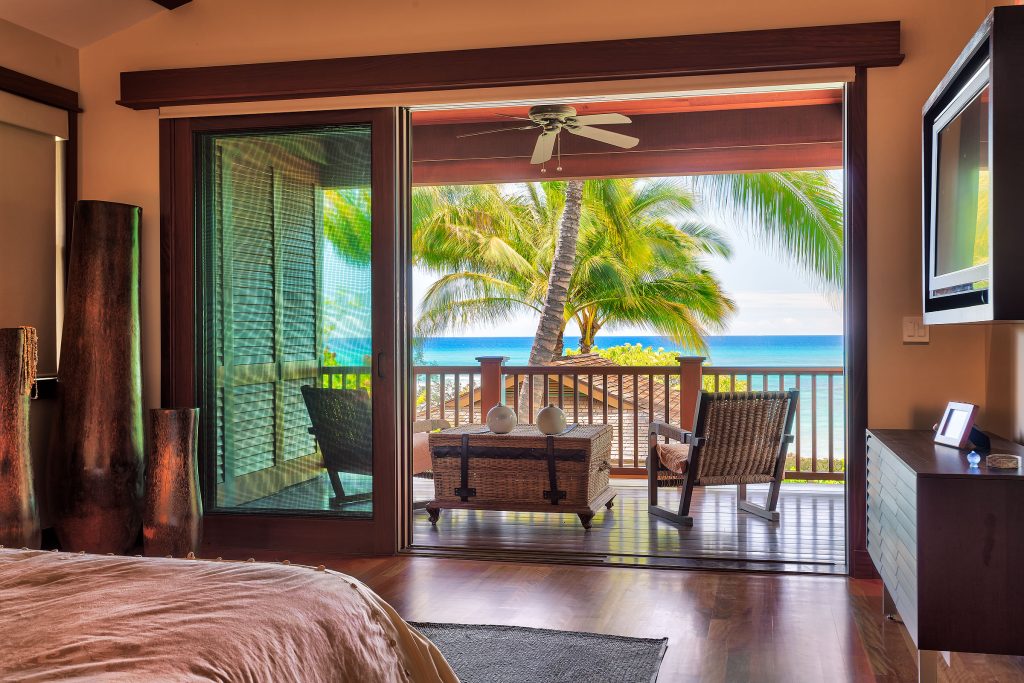
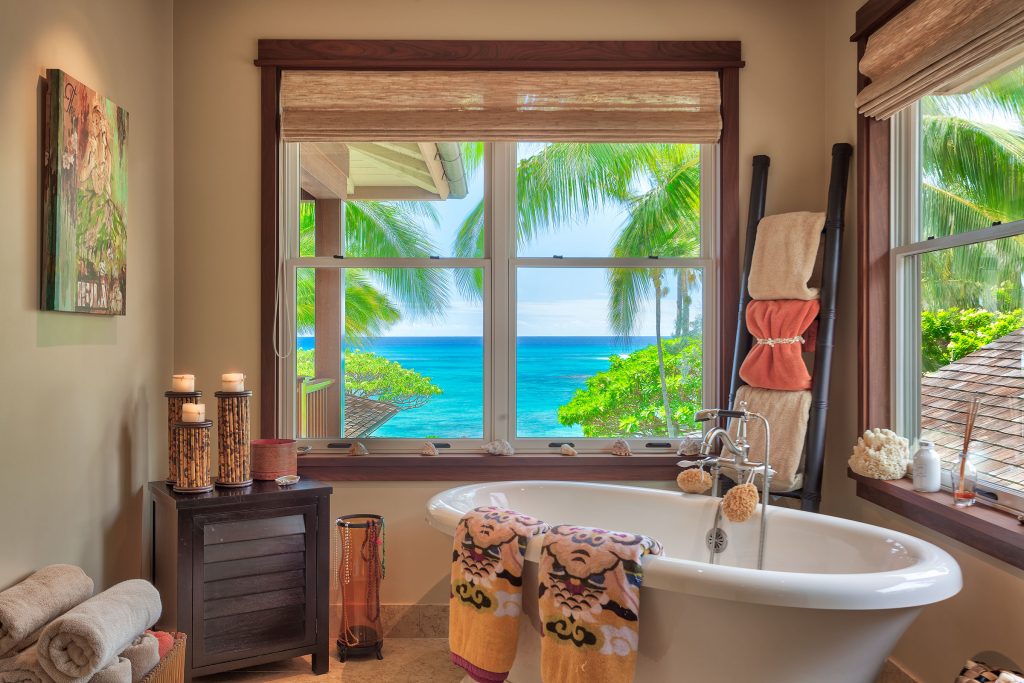
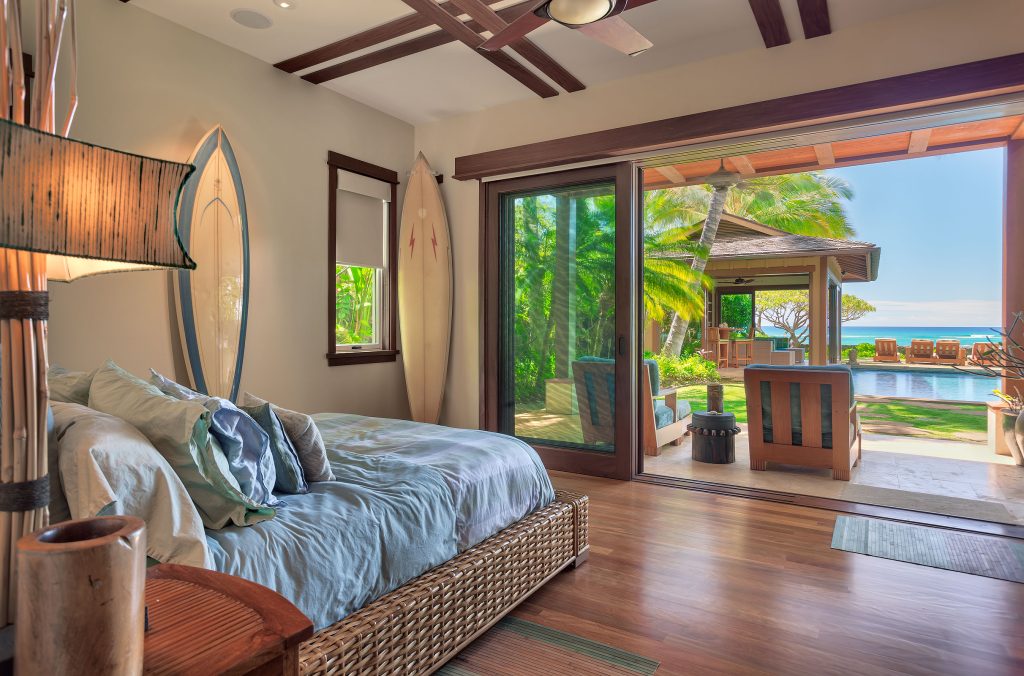
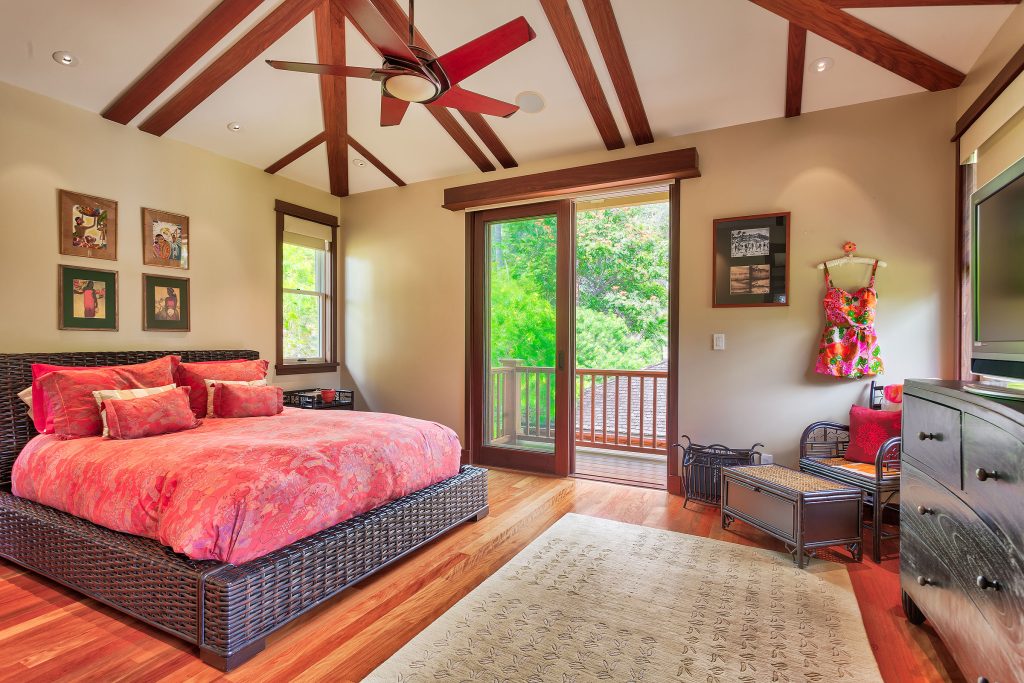
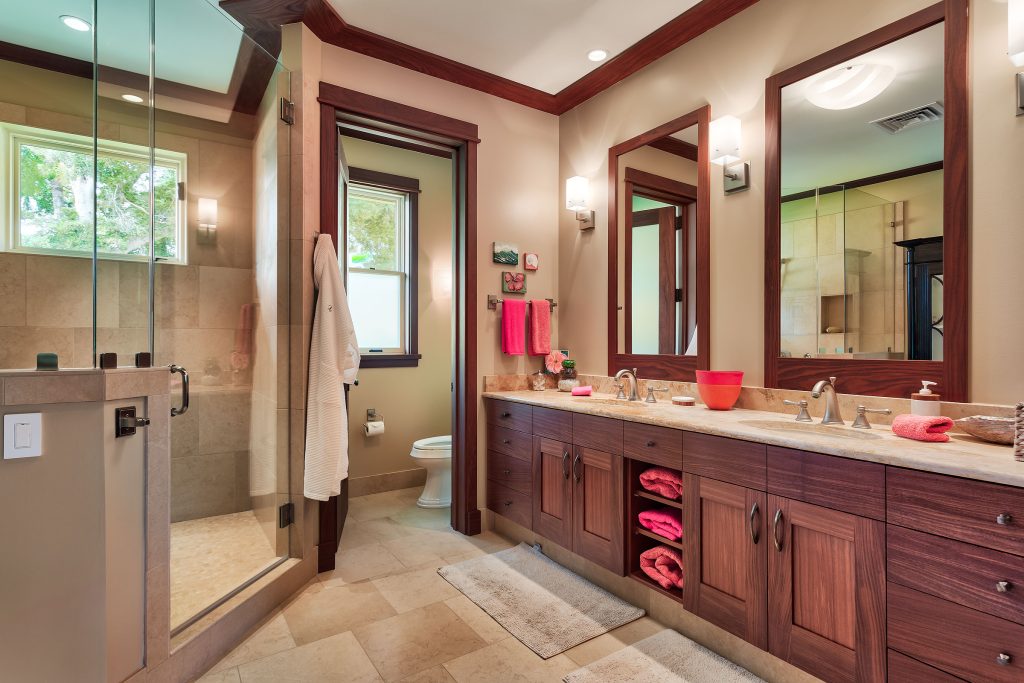
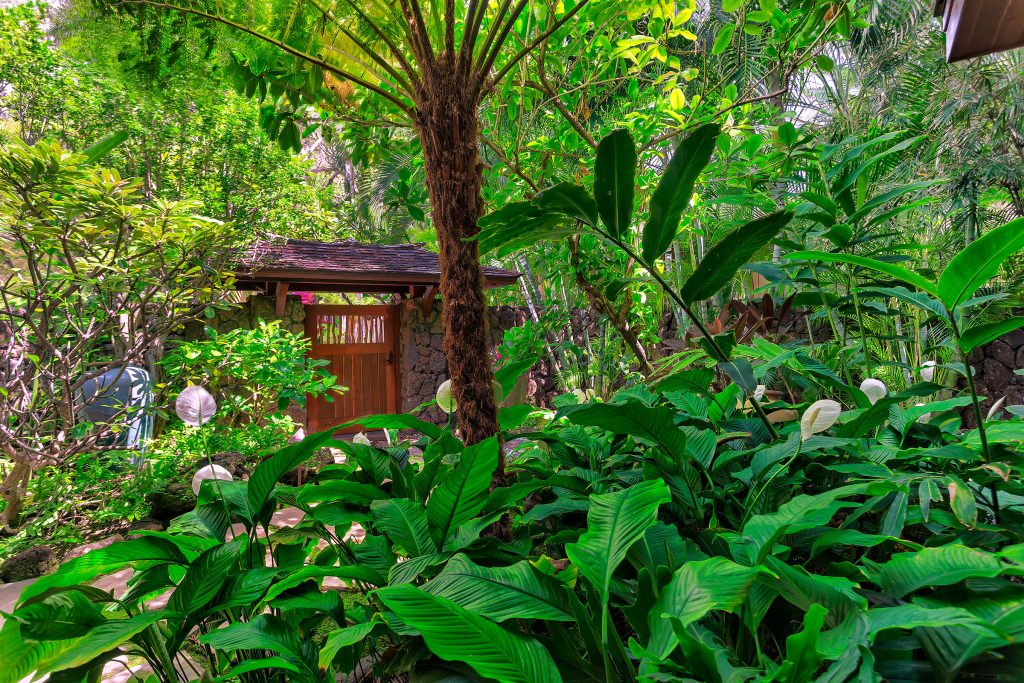
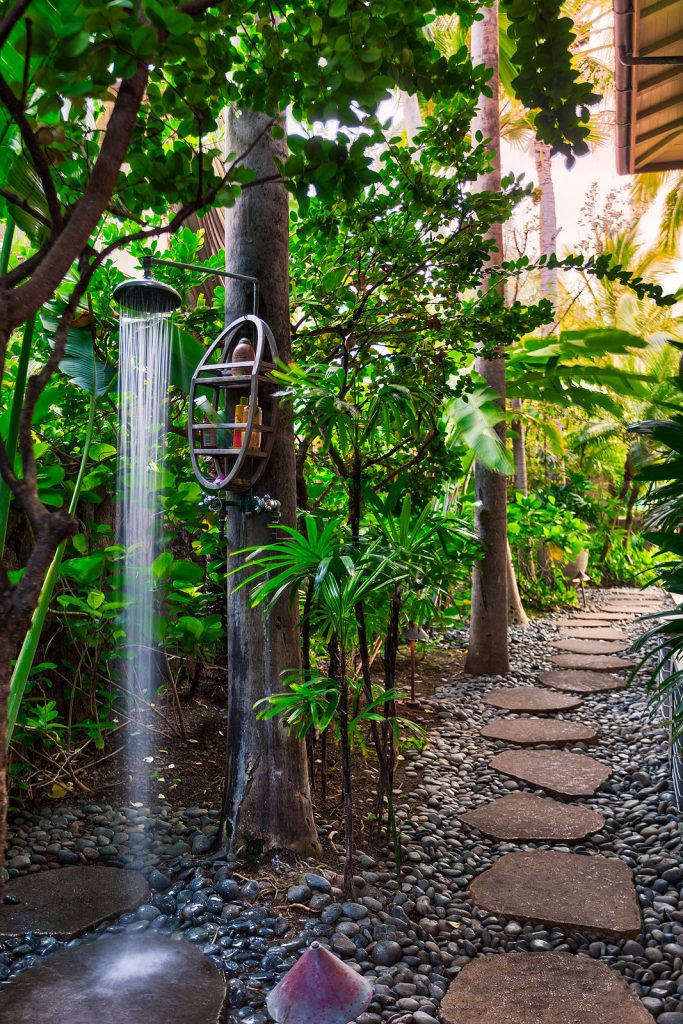
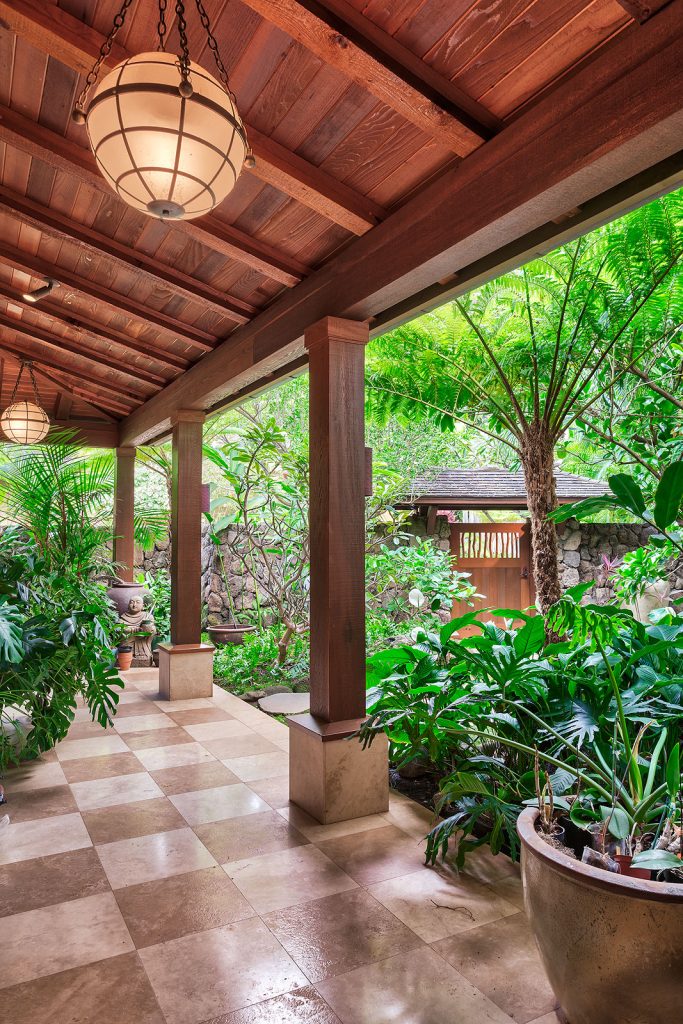
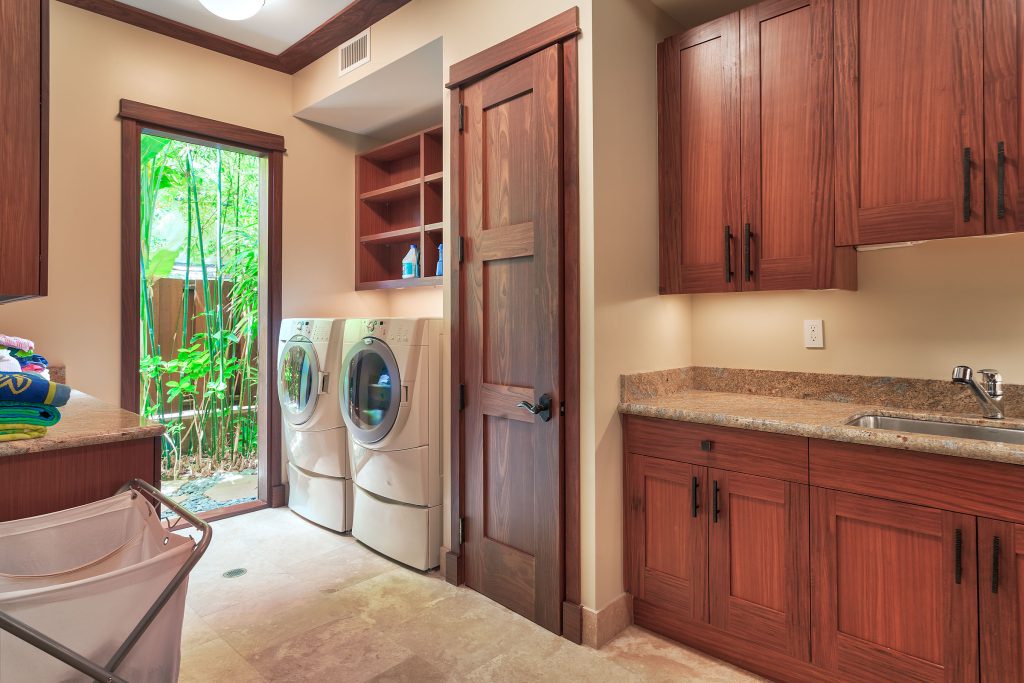
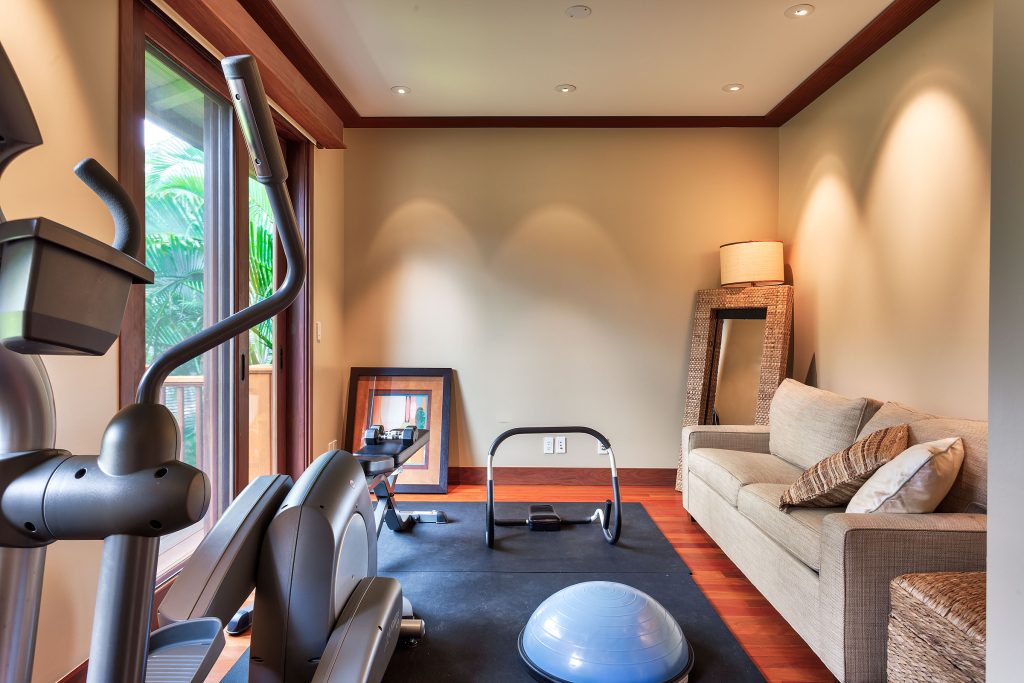
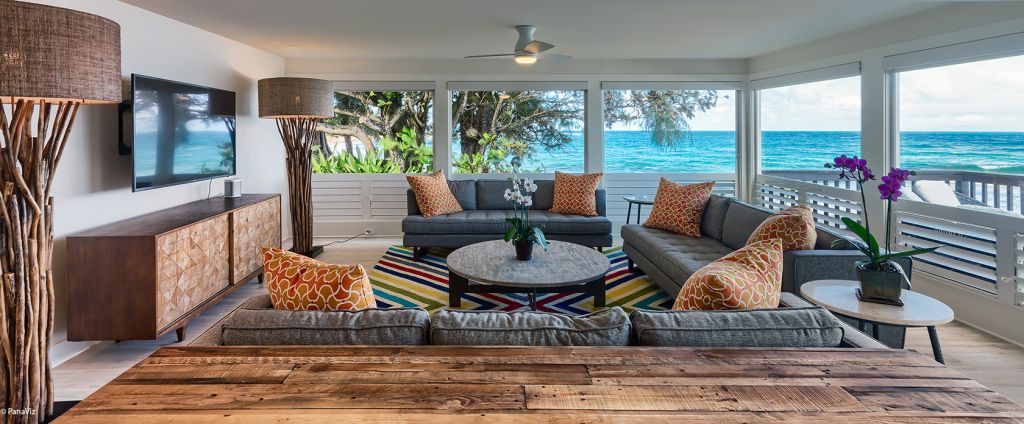
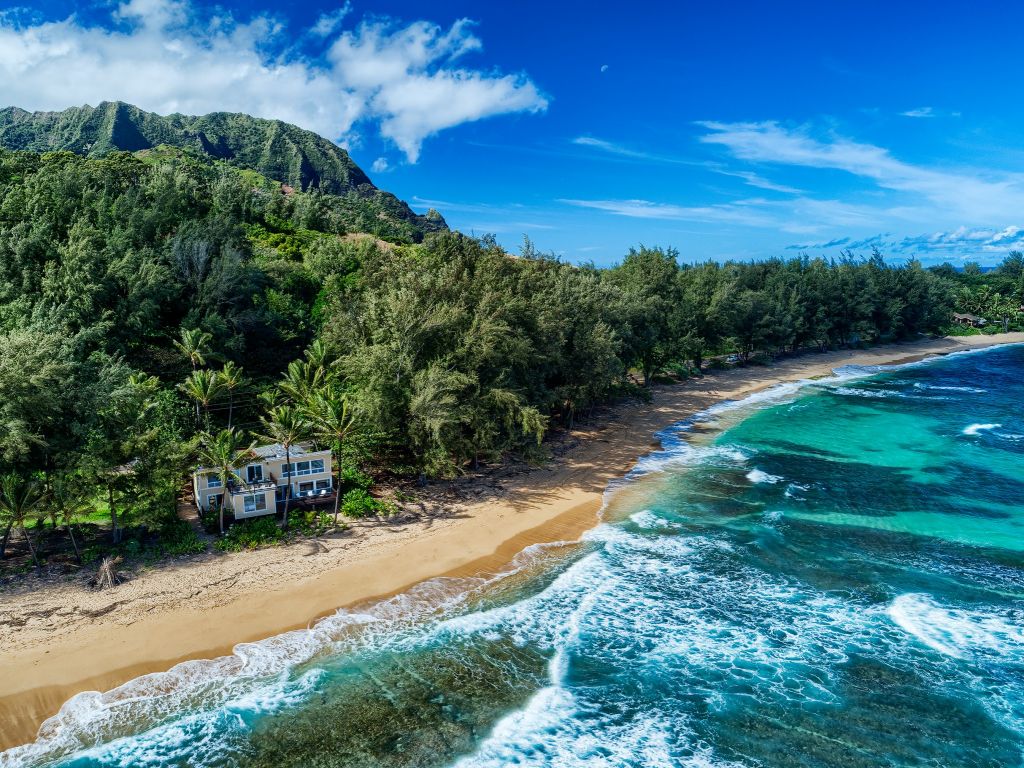
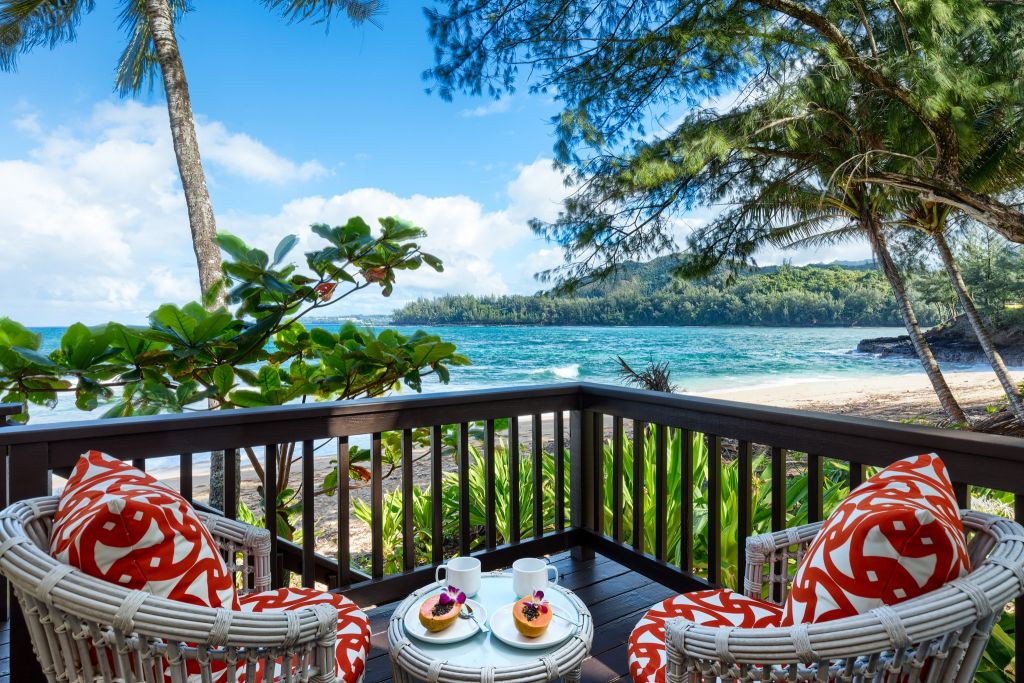
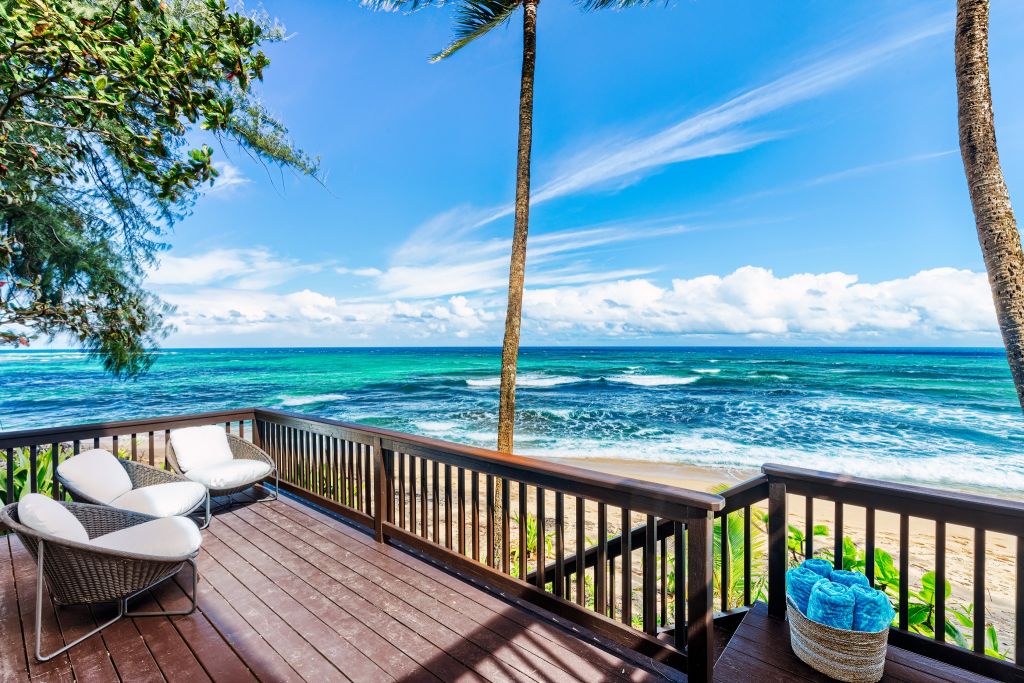
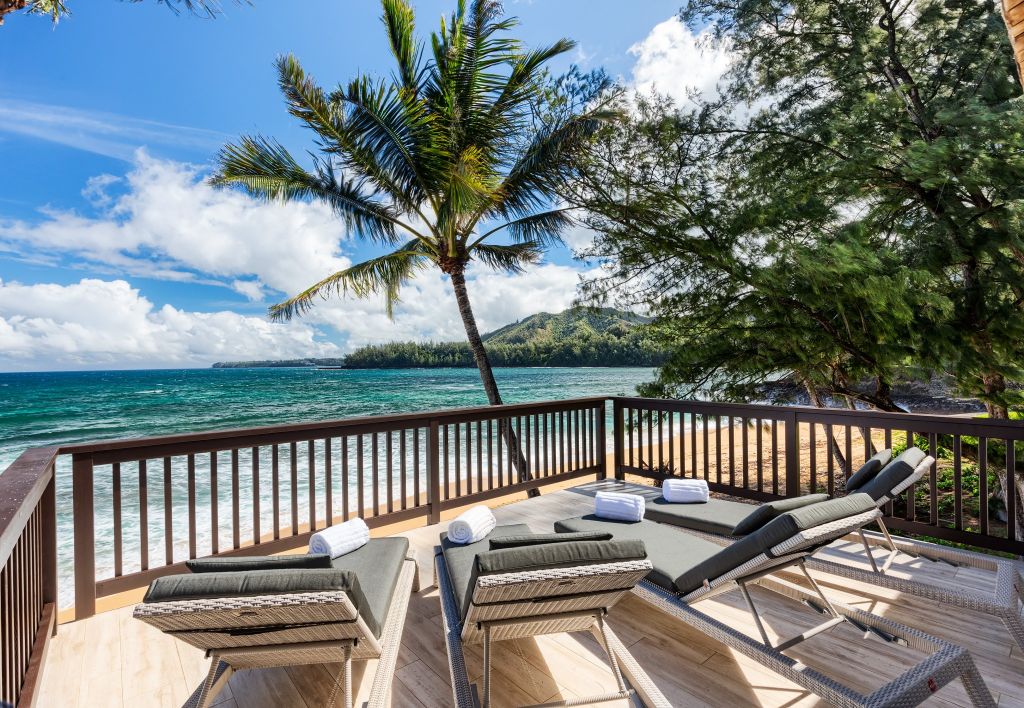
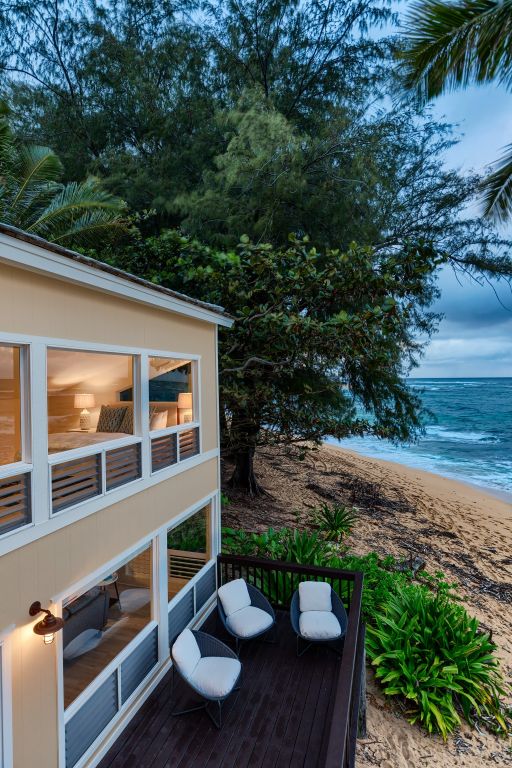
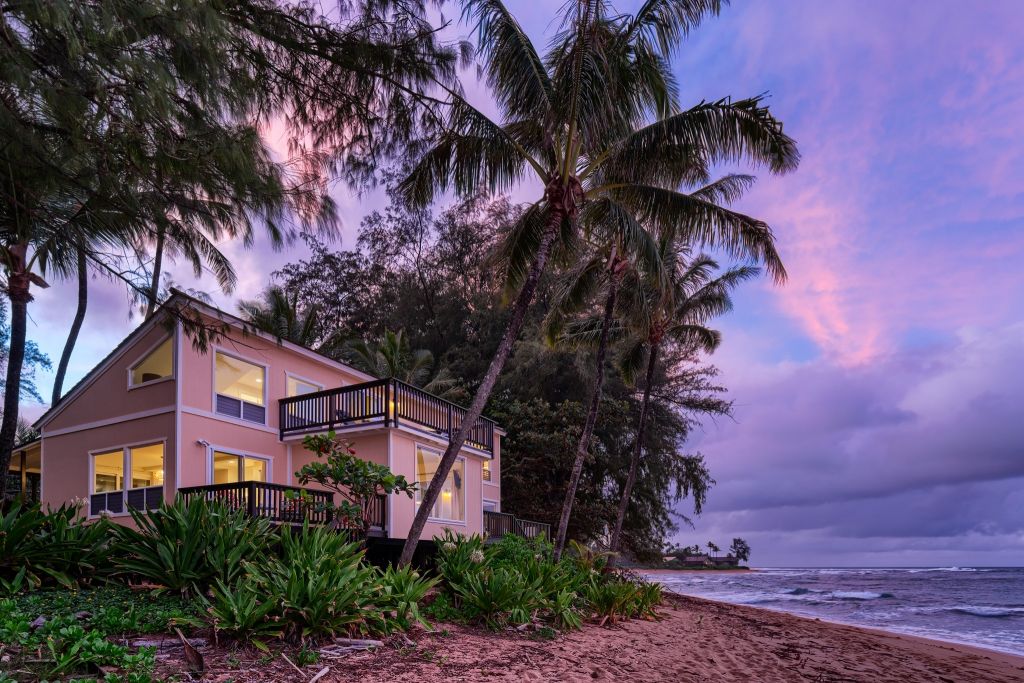
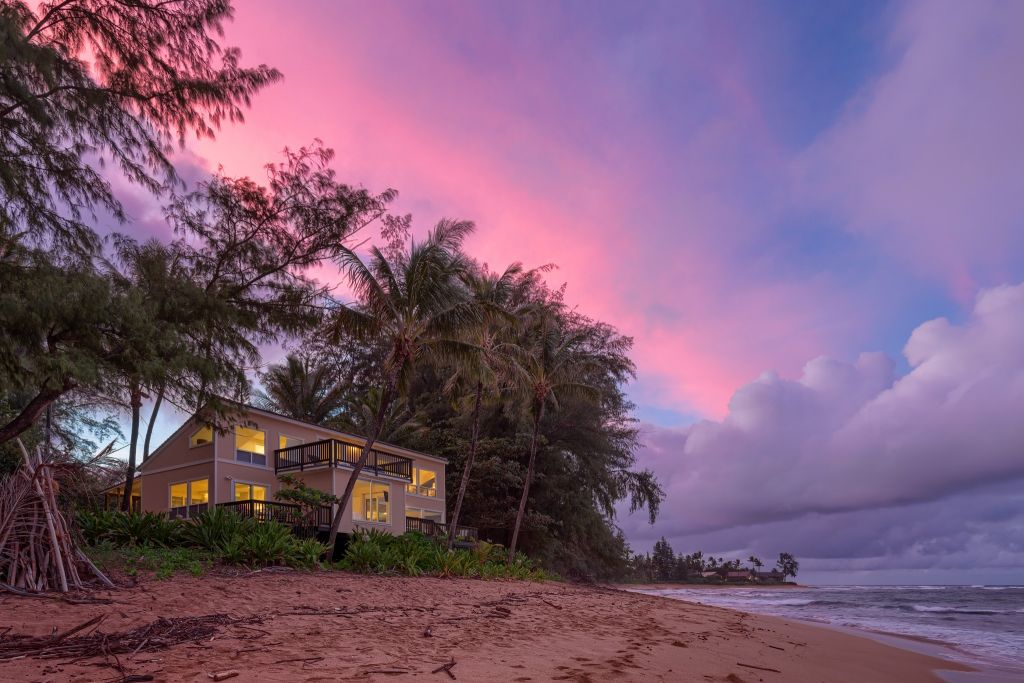
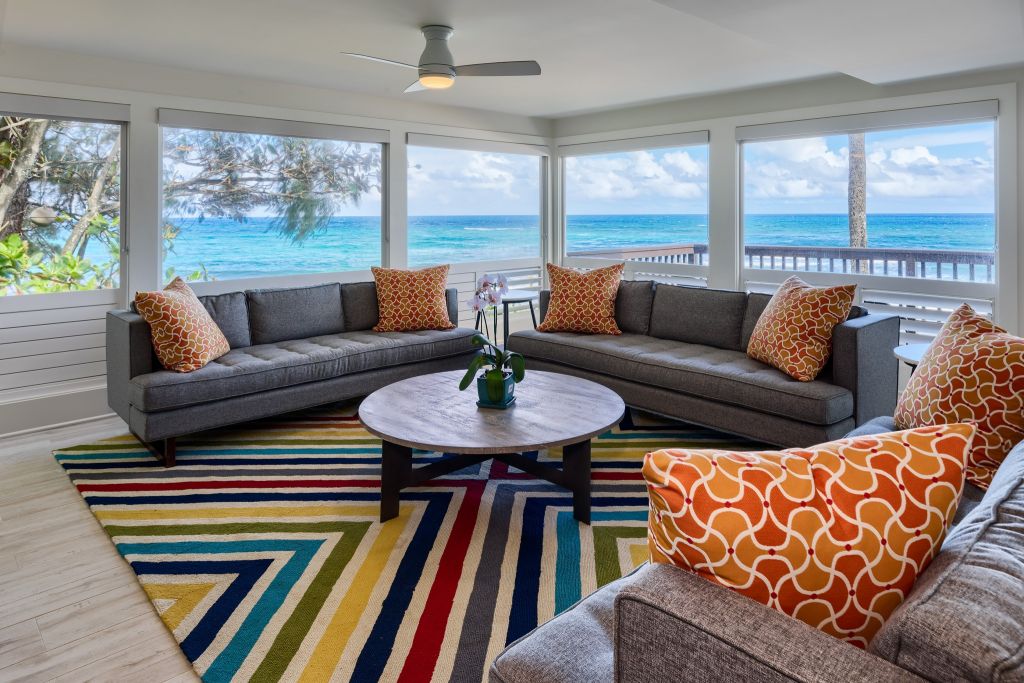
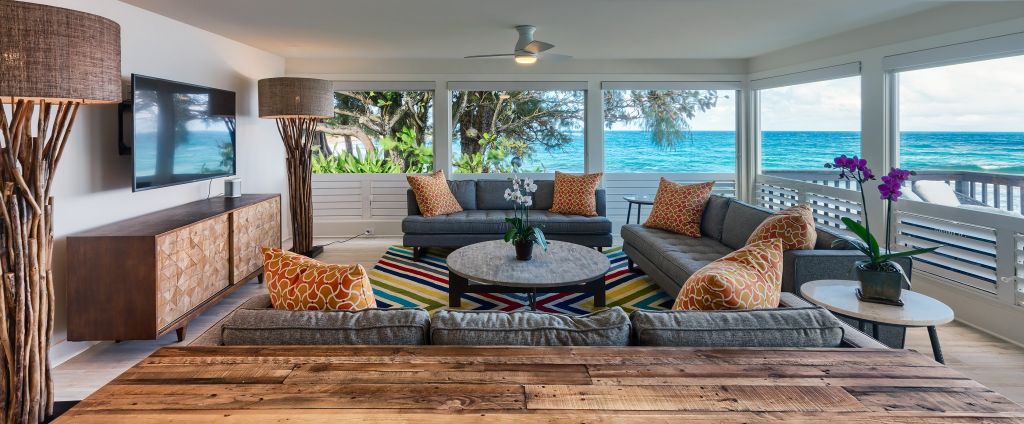
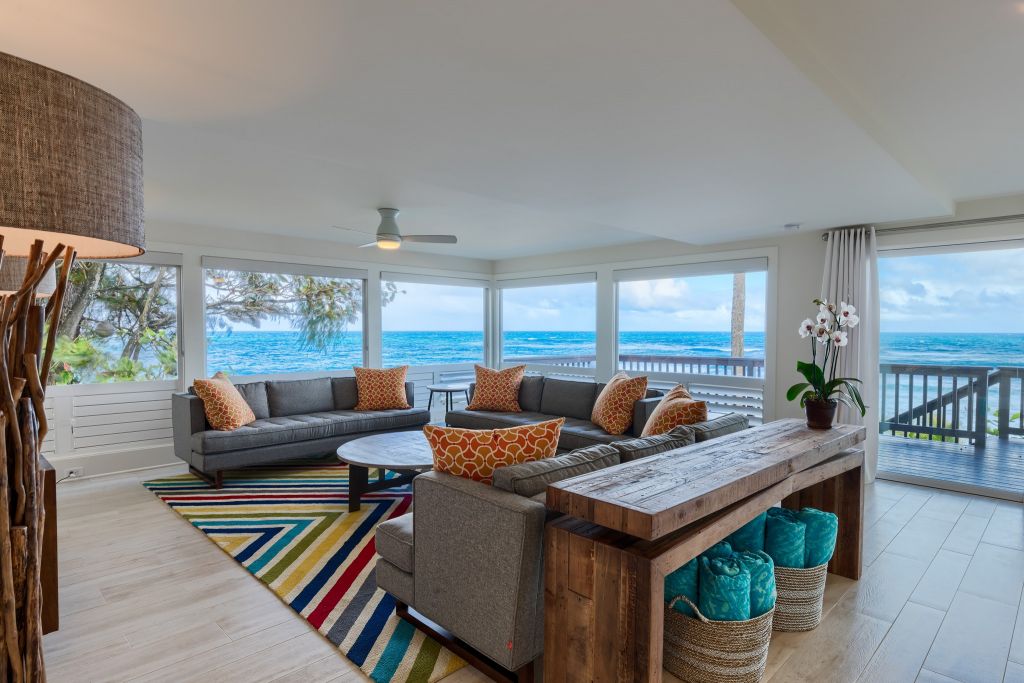
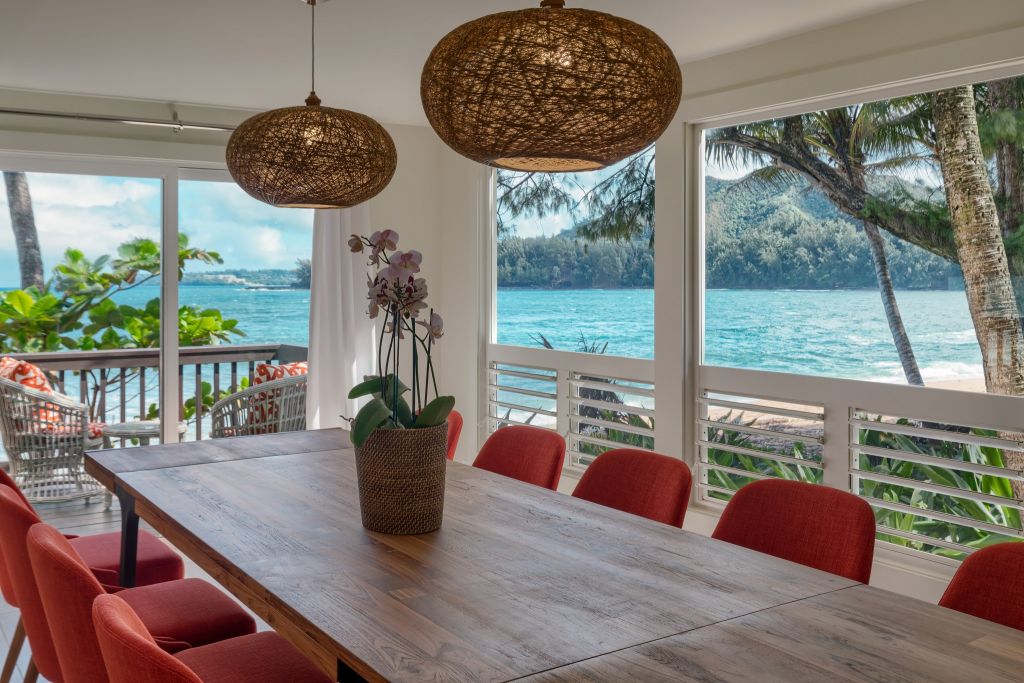
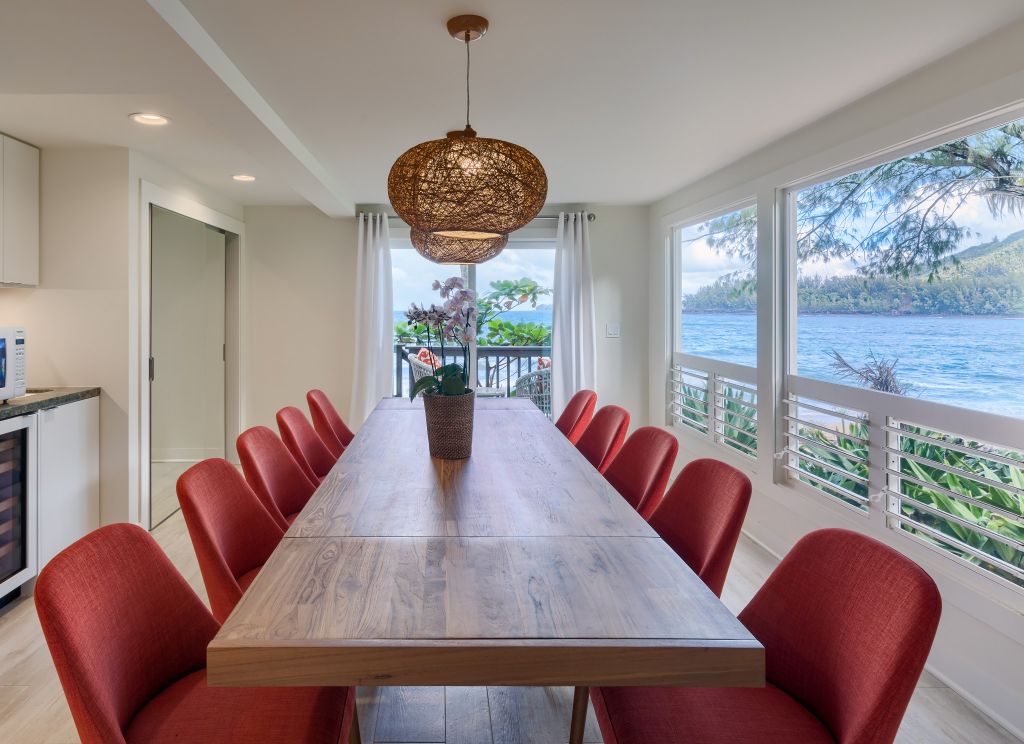
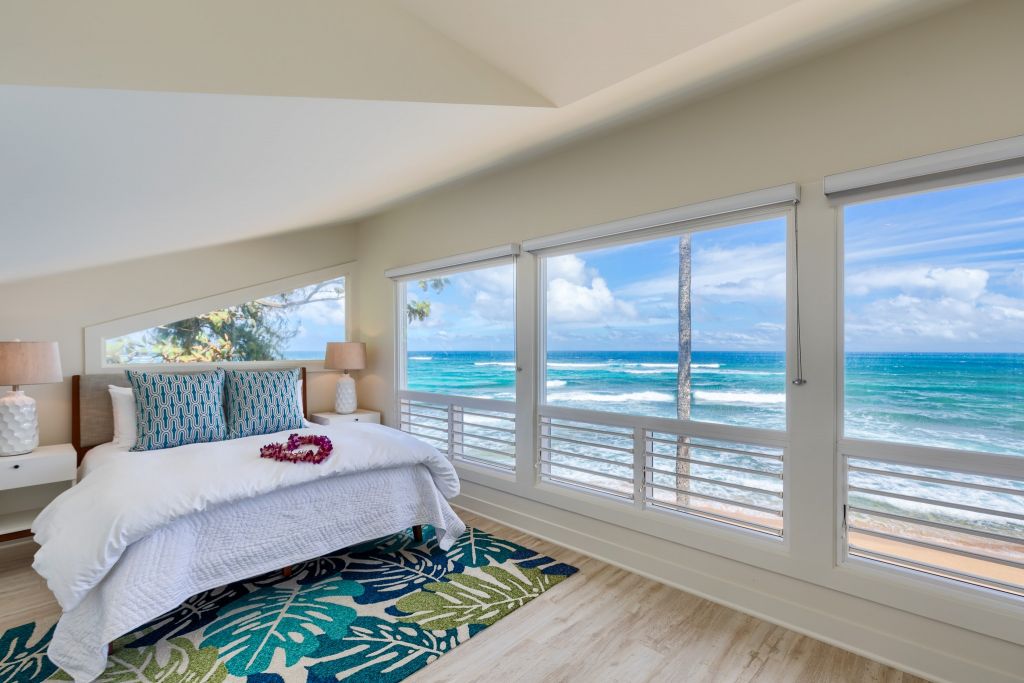
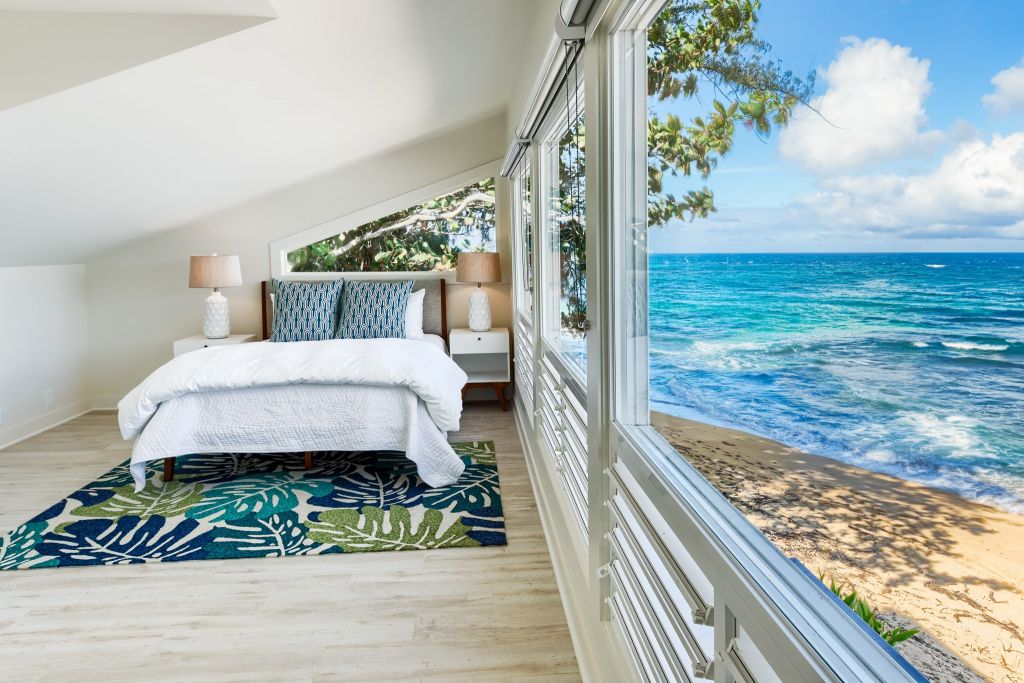
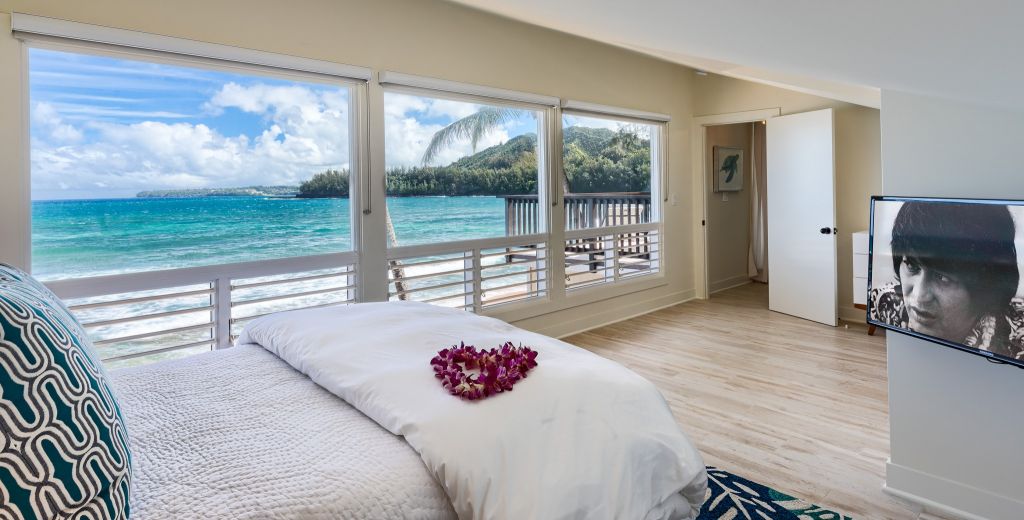
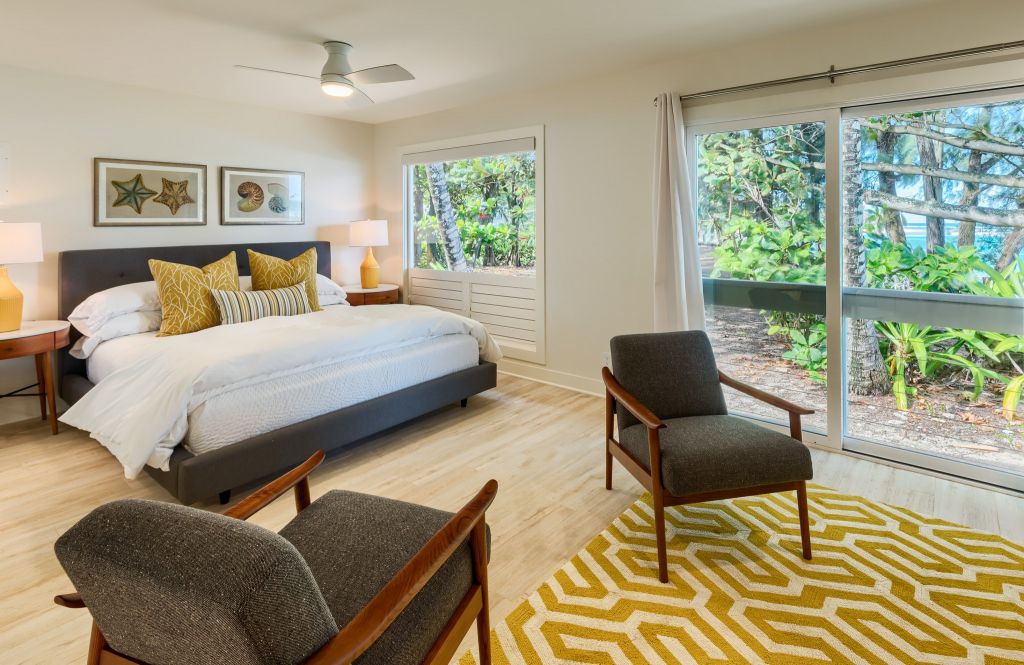
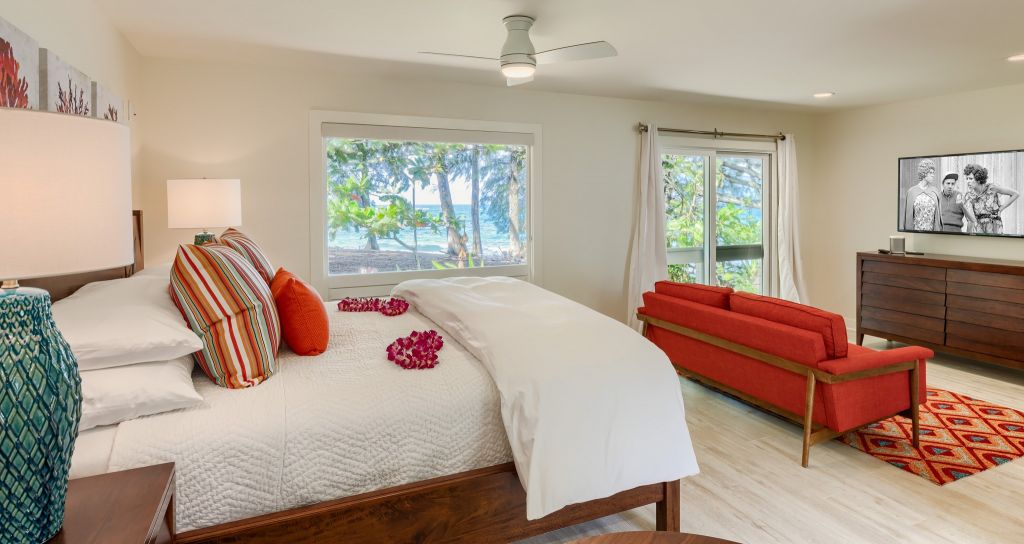
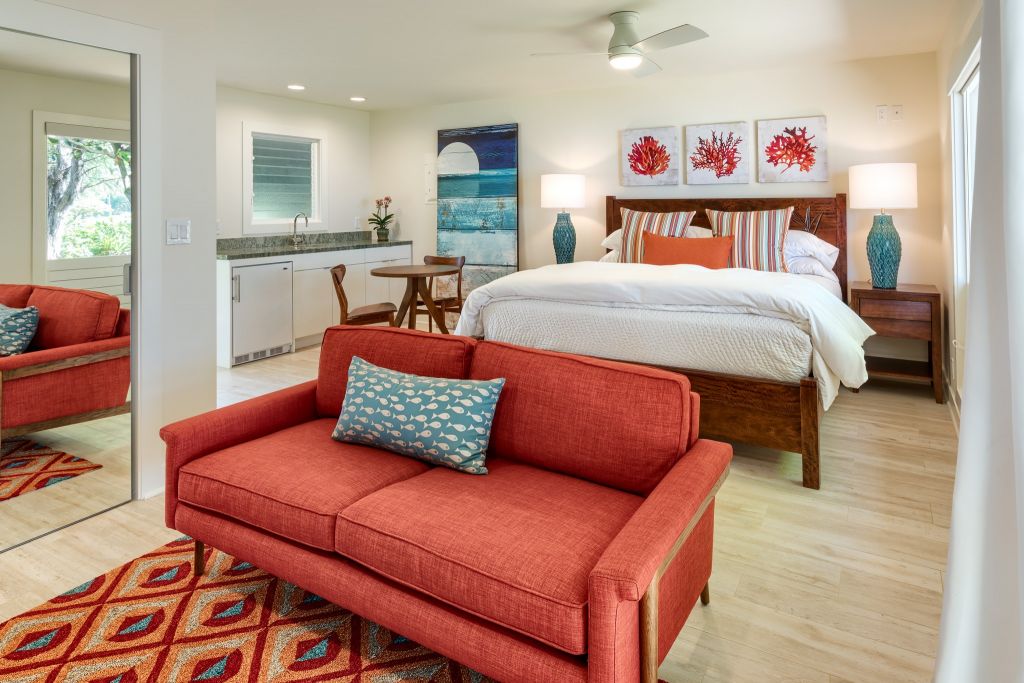
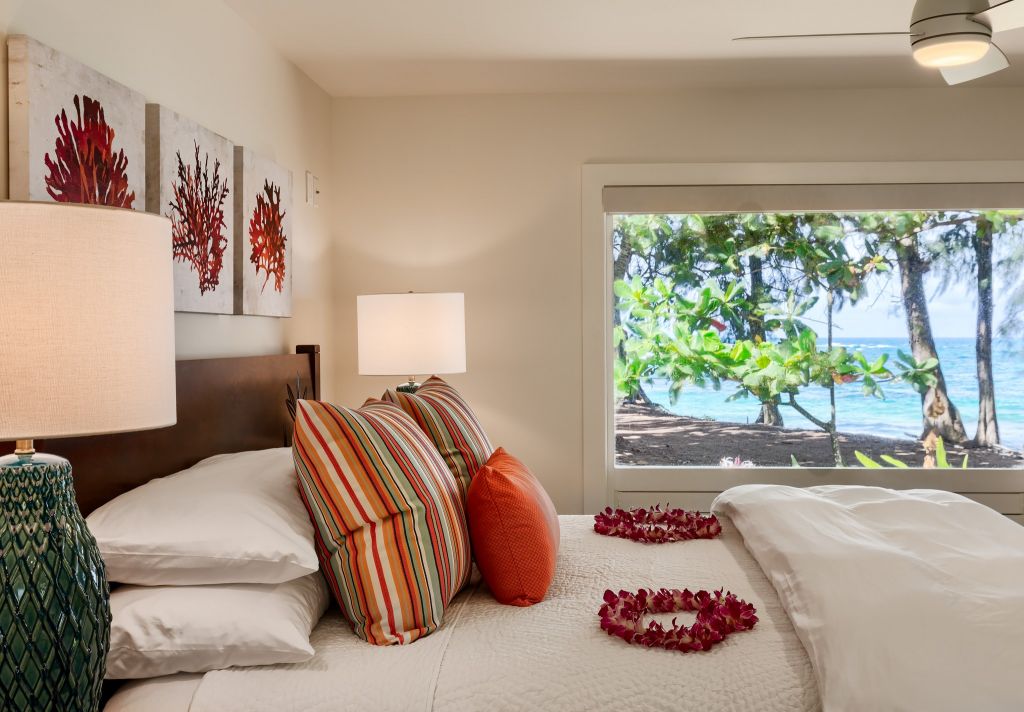
Here, we showcase a glorious home within the Mauna Lani Estates. This home is a gracious showcase of resort life.
The simple luxury of this property is a fresh approach to relaxed resort life. The beautifully-crafted tropical design sits in harmony with surrounding fields of lava and the lush Mauna Lani landscape.
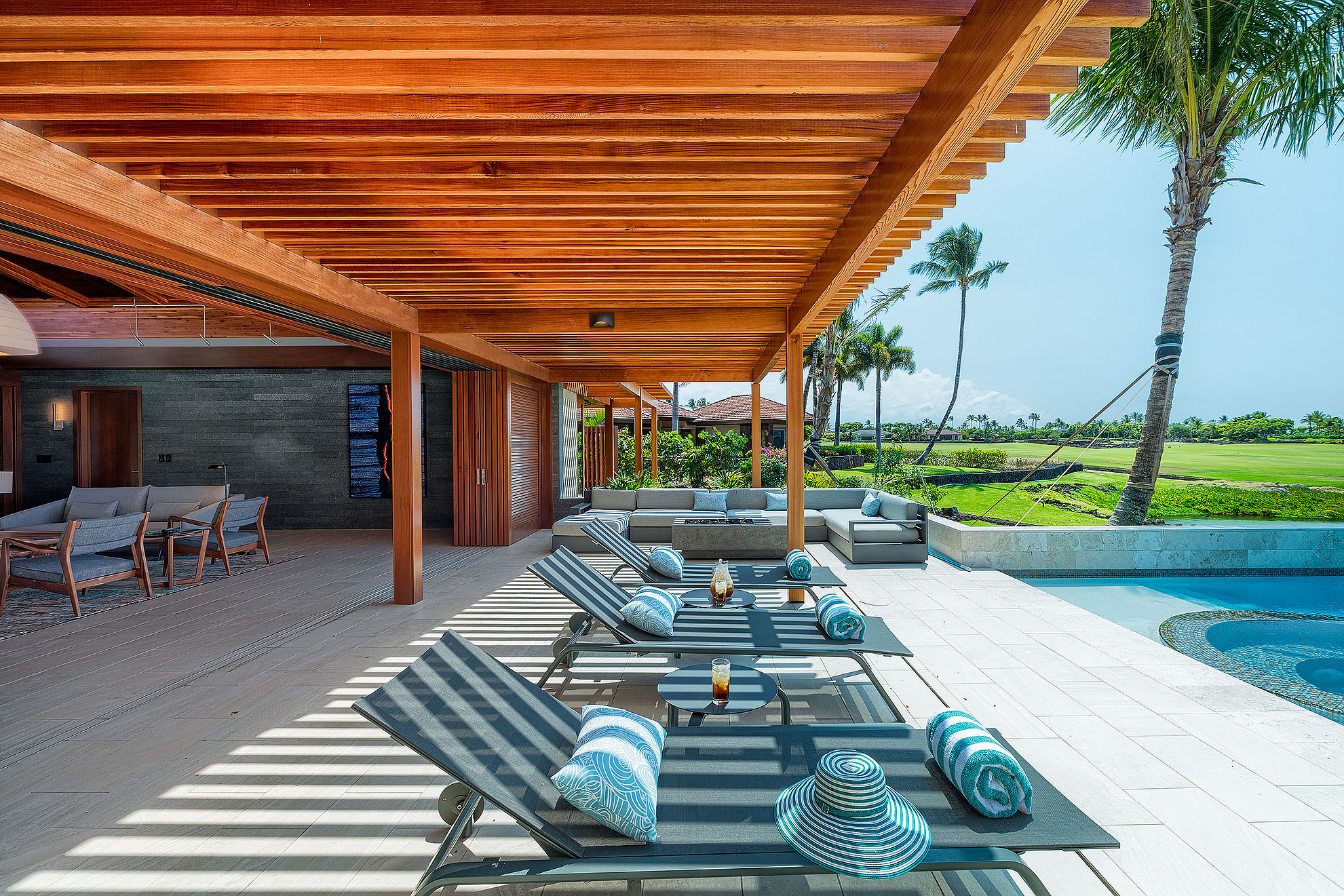
The spaces of the home flow from interior to exterior, and a Hawaiian respect for nature and the land ‘Aloha aina’ is evident in the thoughtful use of natural materials, natural light and natural ventilation.
Mauna Lani Resort
Mauna Lani Resort encompasses approximately 3,200 acres with over 3 miles of accessible oceanfrontage. Named one of the top luxury, eco-friendly resorts in the world, Mauna Lani is home to two upscale oceanfront hotels; the 350 room Mauna Lani Bay Hotel and the Fairmont Orchid Hotel, two 18 hole championship golf courses, Hawaiian spa and fitness club, tennis courts, a property owner’s beach club, Ancient Hawaiian fishponds, historic petroglyph fields, shopping, fine and casual dining.
As part of the Mauna Lani Resort community, this home gets to enjoy the amenities offered by the resort. It is conveniently located to the Mauna Lani Beach Club, golf course and numerous shops & restaurants.
COMPLEX AMENITIES:
Golf community centrally located
Private homes with pool & hot tub
Located within a mile from the Mauna Lani Beach Club
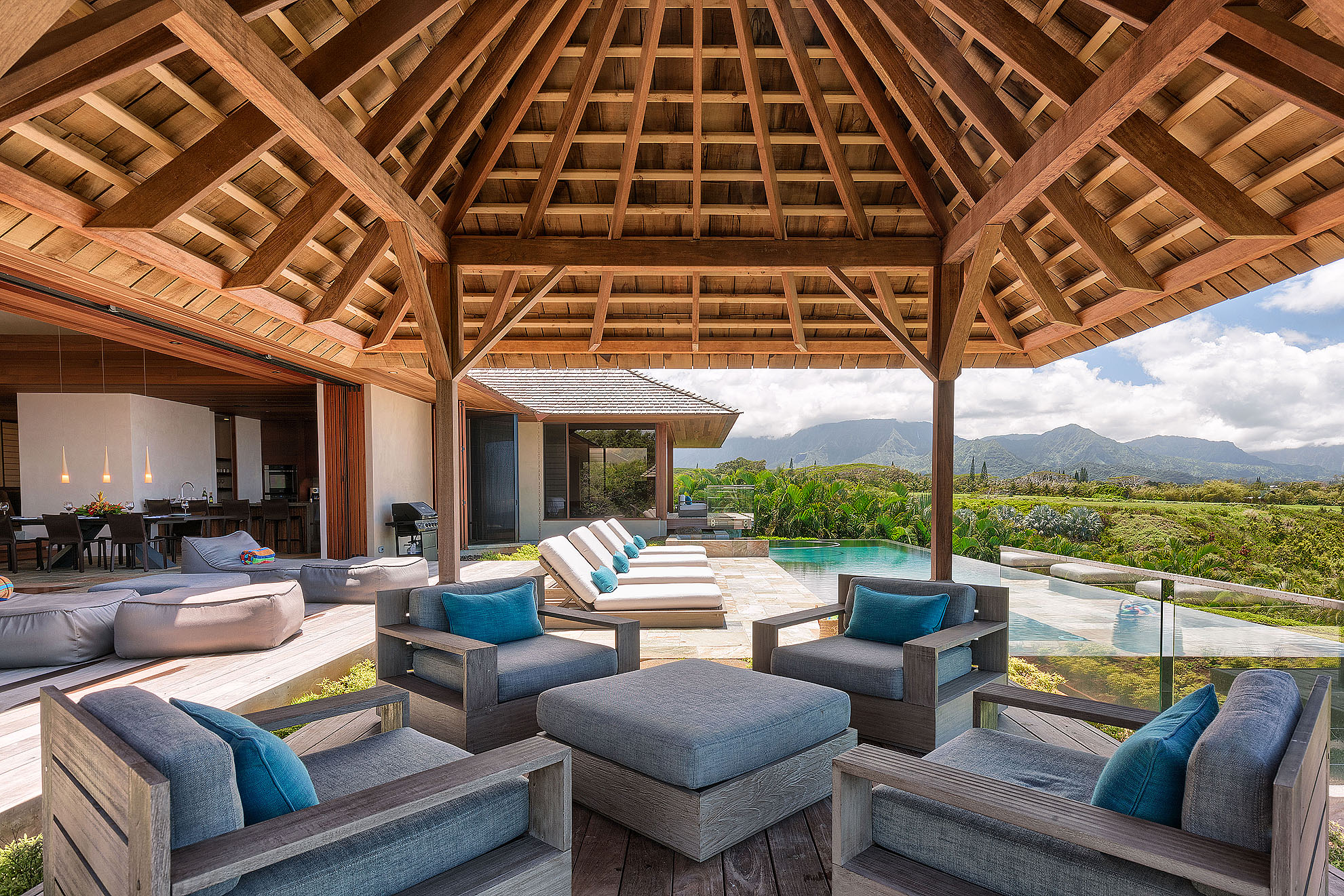
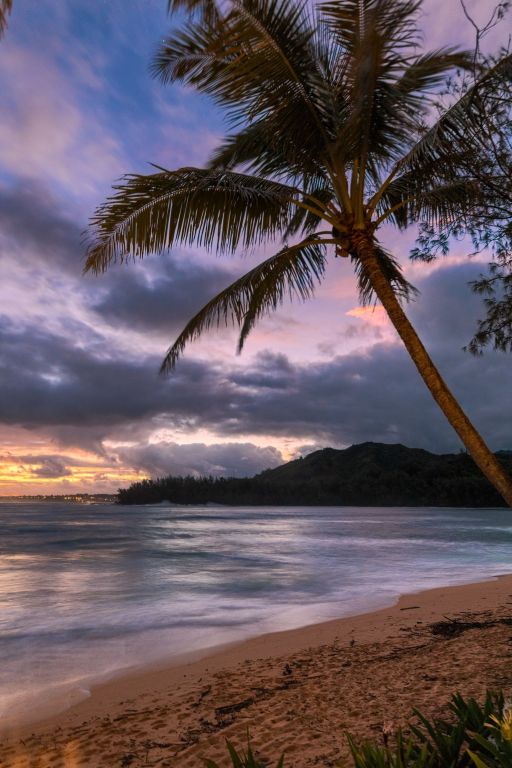
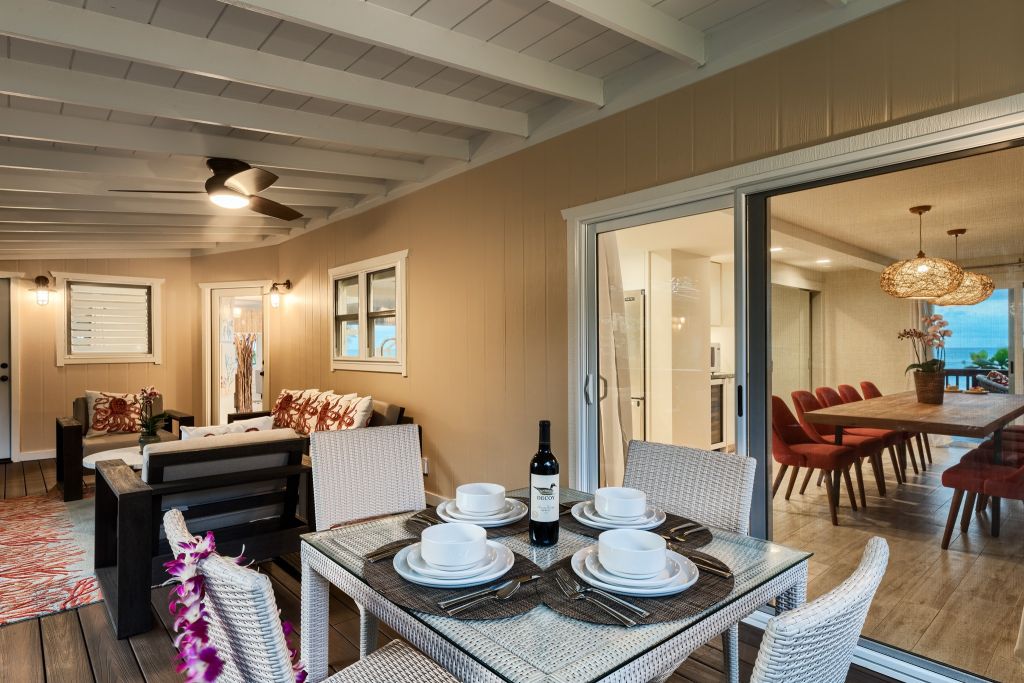
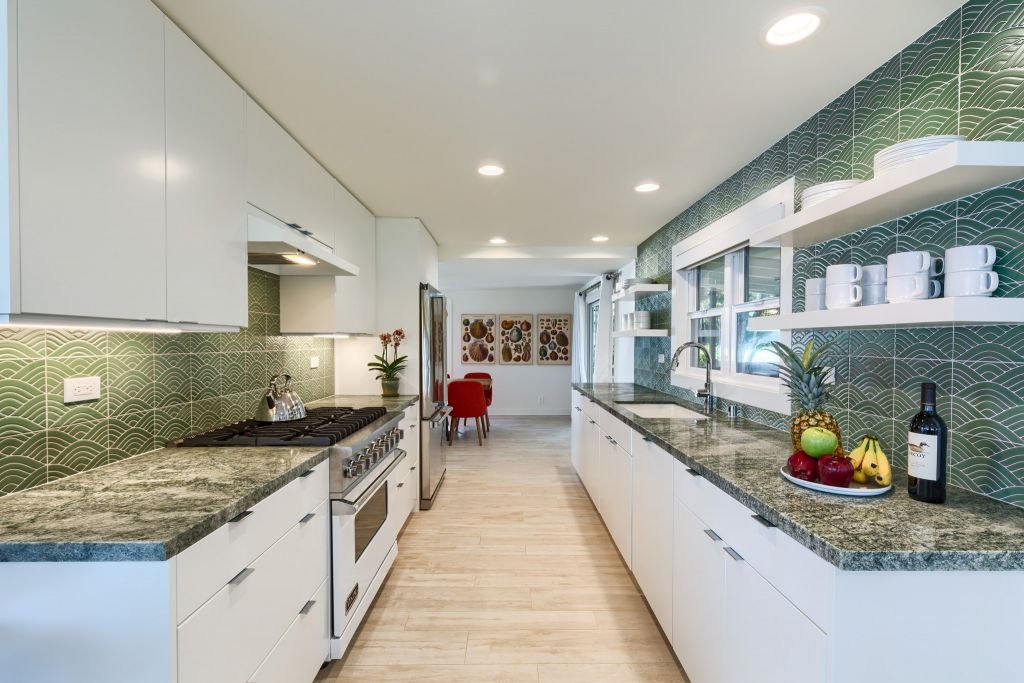
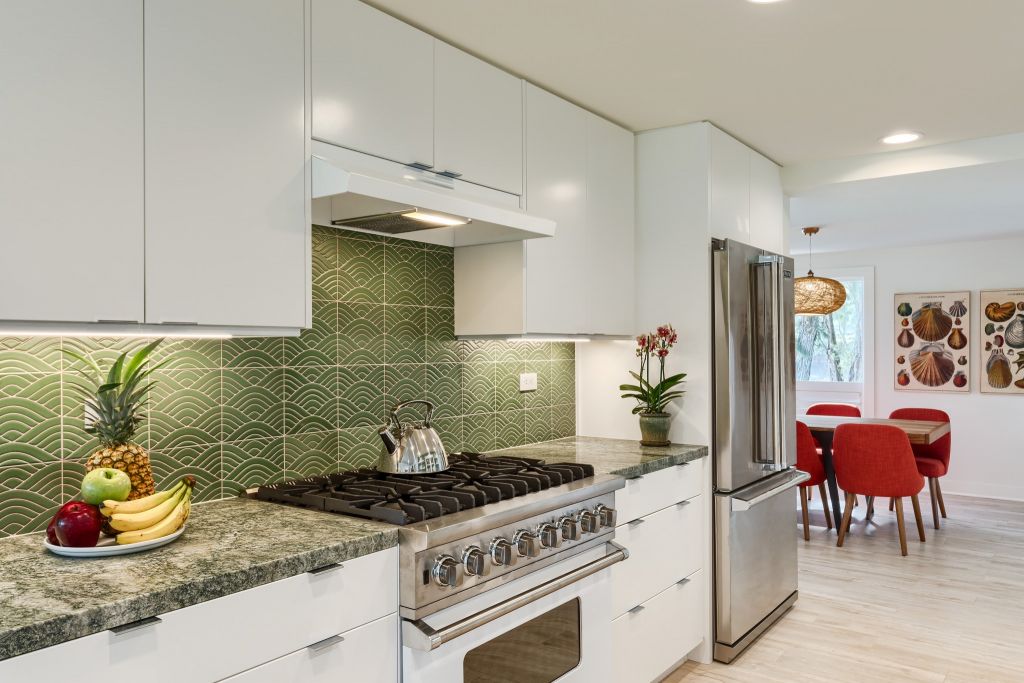
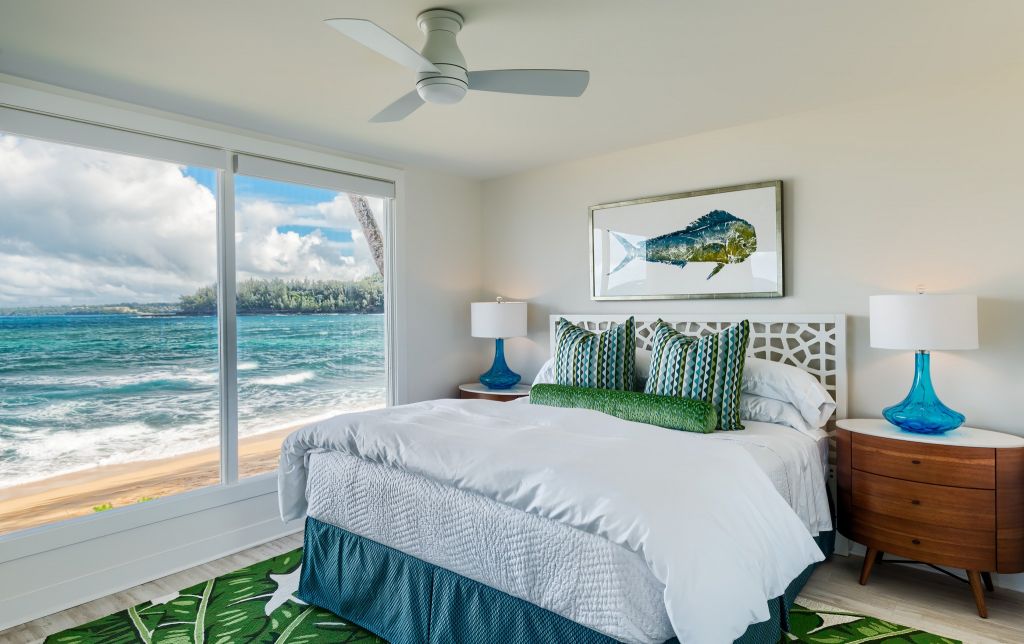
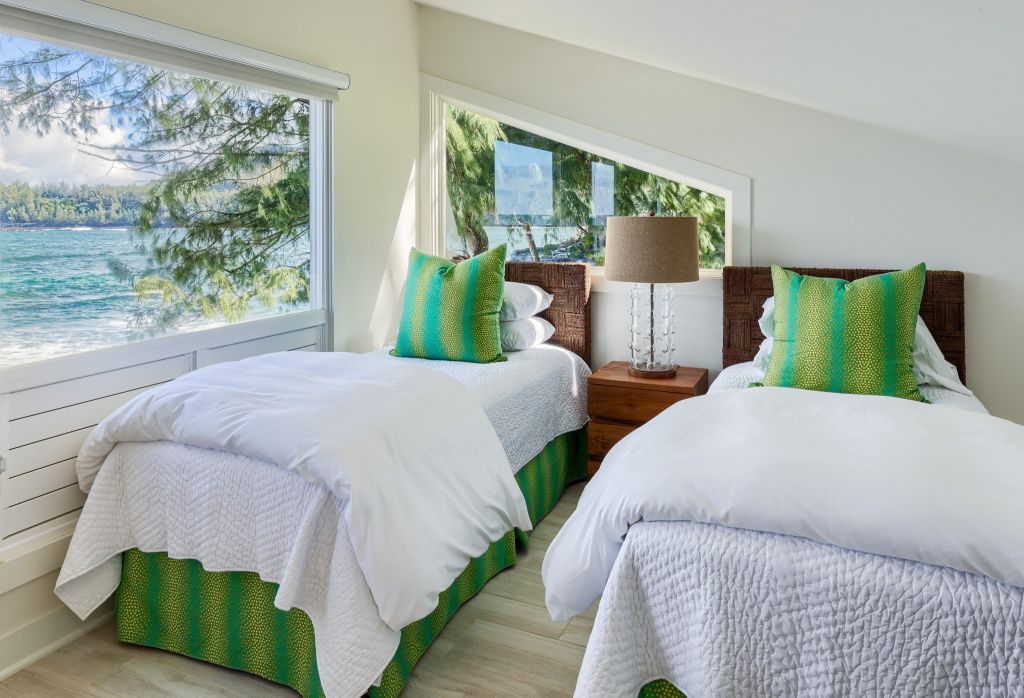
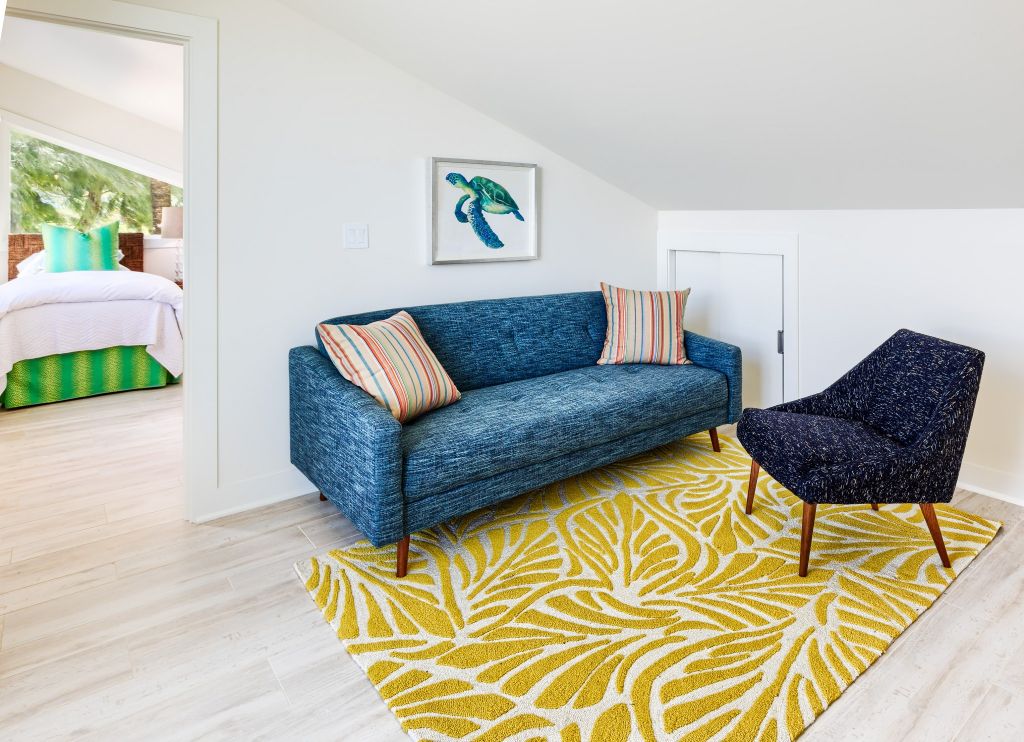
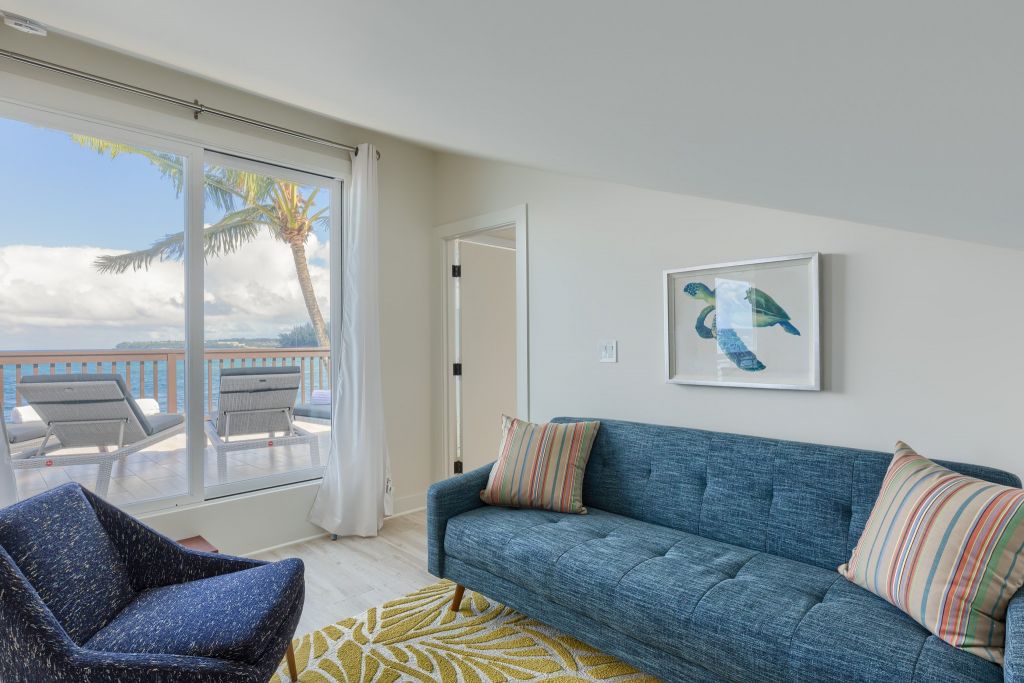
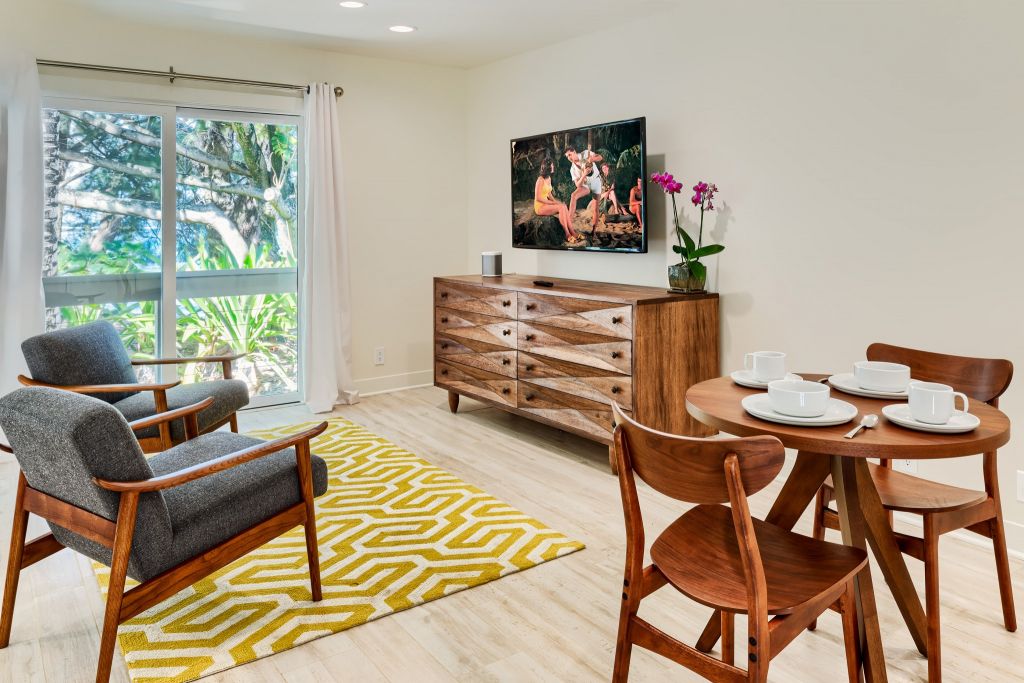
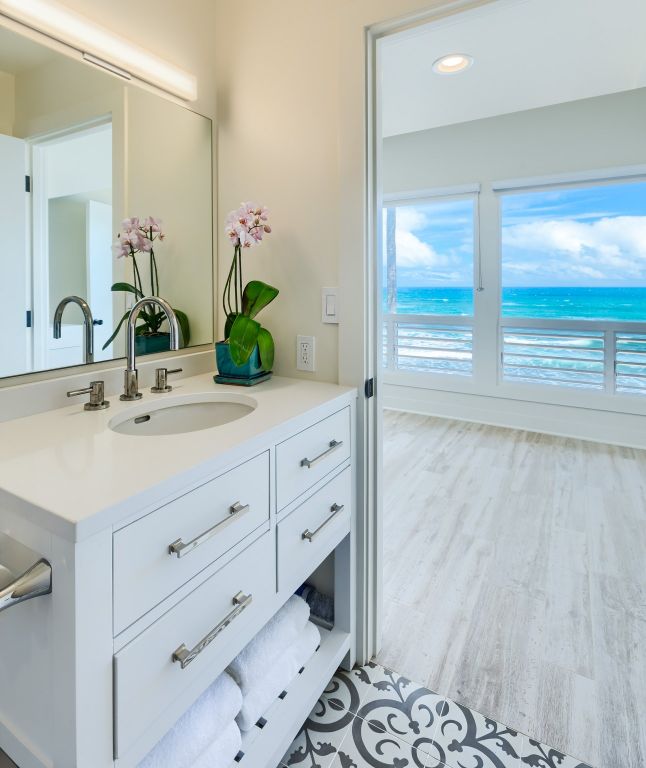
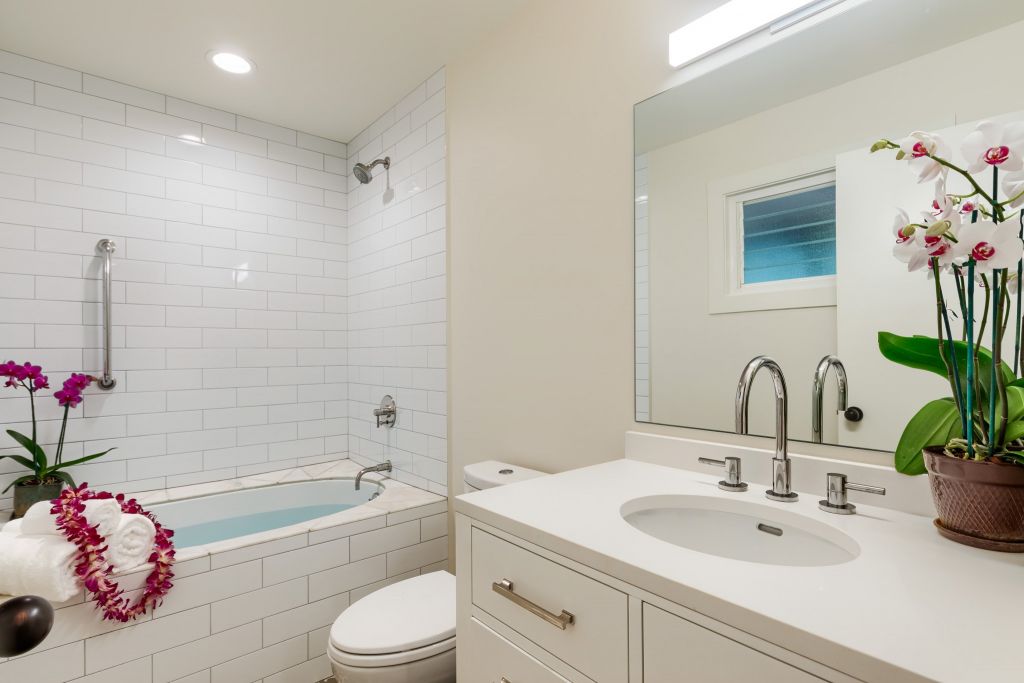
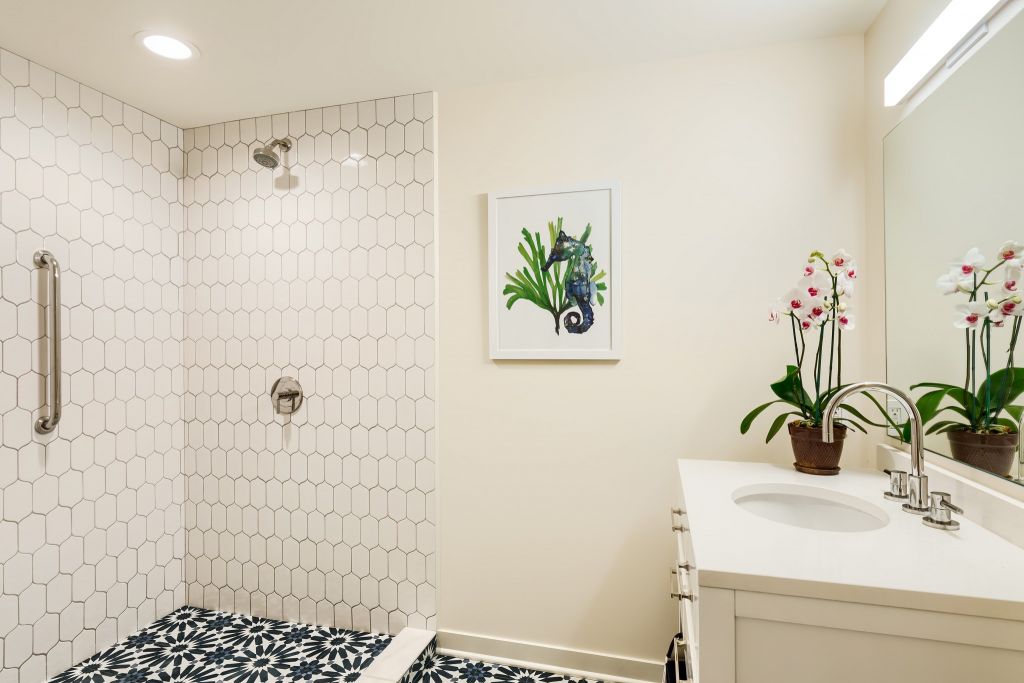
Dave Tonnes of PanaViz was brought on board to photograph the model residence for Timbers Resort’s Kauai project.
About Timbers Kauai – Ocean Club & Residences
Timbers Kauai Ocean – Club & Residences is an oceanfront private residence club located in the resort and golf community of Hokuala on the southeast coast of the island of Kauai. Luxury condominium resort offering residential interest and whole ownership private residences featuring five-star services and amenities.
Hospitality Gallery
47 residences with 2, 3 and 4 bedroom floor plans will be offered.
About Maunai Lani Resort
Kalahuipua’a (“The Gathering Place”)
Mauna Lani Resort encompasses approximately 3,200 acres with over 3 miles of accessible oceanfrontage. Named one of the top luxury, eco-friendly resorts in the world, Mauna Lani is home to two upscale oceanfront hotels; the 350 room Mauna Lani Bay Hotel and the Fairmont Orchid Hotel, two 18 hole championship golf courses, Hawaiian spa and fitness club, tennis courts, a property owner’s beach club, Ancient Hawaiian fishponds, historic petroglyph fields, shopping, fine and casual dining. This very special place where Hawaiian culture is preserved and kept alive is also recognized as one of the most innovated “Green” resorts in the world. Preserving Hawaii’s resources and being at the forefront of environmental stewardship, Mauna Lani is generating over 1 million kWh of green power through solar energy innovations. Photovoltaic systems provide operating power and supplies the majority of the resort’s daytime water pumping power requirements. Irrigation water for the two golf courses is supplied by brackish water wells, pumping more than 3 million gallons a day. First settled over 800 years ago, Mauna Lani Resort is marked by numerous archaeological sites, early Hawaiian foot trails, royal fishponds and lava formations. Trails through the resort reveal shelter caves, burial sites and petroglyphs. Real estate opportunities are many and varied both in selection of product and prices points. Mauna Lani still offers some of the most reasonably priced real estate on the Kohala Coast. Neighborhoods include:
PanaViz has provided hotel and resort photography for the following communties within Mauna Lani Resort.
● Mauna Lani Terrace
● Mauna Lani Point
● 49 Black Sand Beach
● The Cape
● Champion Ridge
● The Estates
● The Islands
● The Villages
● Pauoa Beach
● Ke Kailani
● The Fairways
● Palm Villas● Golf Villas● Kulalani● Ka Milo Property owners at the Mauna Lani Resort can join the Advantage Club, which provides charge privileges and discounts at some resort venues, use of the Beach Club, Racquet Club and priority tee times and reduced green fees at both golf courses.
PanaViz is an architectural photographer focusing on photography of hotels, resorts, commercial and luxury residential real estate. Our work spans across the globe.
David, our founder and lead photographer, is a highly sought award winning architectural photographer. His assignments have taken him across the globe.
Dave’s passion for his craft comes through. He has a unique ability to capture the architecture and interiors of diverse properties, places and spaces.
Luxury pools. As a world class photographer of spaces, David gets to photograph some phenomenal properties across the globe.
A majority of these properties have a least one pool and hot-tub, some have several.
Here are some pools we have captured in the Hawaiian Islands. Photographed at dusk and early evening.
This property overlooks Holualoa Bay on the Big Island. Beautifully landscaped w/fragrant, flowering plants.
A luxury estate in Hanalei Bay, Kauai.
A home in Kona, Hawaii.
A very majestic home on Kauai.
Home in Kohanaiki Resort, Kona, Hawaii.
Lahaina, Maui home.
Hualalai Resort home on the Big Island of Hawaii. Kona Coast.
PanaViz is an architectural photographer specializing in photography of hotels, resorts, commercial and luxury residential real estate across the globe.
He has a unique ability to capture the architecture and interiors of diverse properties, places and spaces.
As a world class photographer of spaces, David is a expert in aerial photography, architectural photography, interiors photography, architectural product and hospitality lifestyle photography.
This home was designed to capture Hawaiian indoor/outdoor living. It had 5 bedroom and 4-and- a-half-bath. It had glorious views. It was located on Oahu’s exclusive Gold Coast.
The home offered all of the features expected in a luxury home. A splendid entrance lead to a courtyard with glorious tropical foliage.
A gourmet kitchen, and gorgeous living areas finished with exquisite solid wood and natural stone open onto a beautiful pool, spa, pool house; all within the sounds of breaking surf and views of incredible sunsets.
Neighborhood
Kahala is the exclusive “Beverly Hills” of Honolulu, being the wealthiest part of Oahu. Kahala Hotel Resort and Spa is in this exclusive part of Honolulu bordered by Diamond Head crater and Waialae Country Club. Kahala has a collection of gorgeous multi-million dollar homes to rival those any where in the world.
What is the difference between Panoramas and 360 Panoramas?
360 panoramas show the widest angle of a space, including up, down, and all around.
A panorama is any wide-angle view or representation of a physical space, whether in painting, drawing, photography, film, or a three-dimensional model. The motion-picture term panning is derived from panorama.
An Example of a Panoramic Photo
Digital photography has made it possible for us to take a number of wide angle images of a space and stitch it together so that a full 360° of a scene is captured. Thus the 360 panorama.
This image is than displayed in a viewer that allows a user to look around within this photo in an immersive experience.
Now see the 360 interactive panorama of the above scene here.
Virtual Tours for a Home
360 Panoramas have been around for over 20 years. The technology has improved significantly – it’s easier to use, navigate, and load now.
Panoramas have been perceived as gimmicky in the past, but when well implemented, they can add value to the way you display your property.
360 Virtual tours add to the vignette of still photos that exist for your property. They are a wonderful way to show the layout and flow of a space, the all around views, the soaring ceilings and wonderful carpeting and flooring.
360 Panoramas are also referred to as 360 Virtual Tours
Dave Tonnes: Aerial Panoramic photography is a hobby of mine. These are taken mostly around the Hawaiian Islands.
In addition to helicopter-based aerials, I also capture low‑altitude drone panoramas for architectural, hospitality, multifamily, senior living, and commercial developments. Drone platforms allow us to photograph precise elevation bands, controlled vantage points, and tight site conditions where helicopters cannot operate. These drone panoramas integrate seamlessly with our high‑altitude helicopter imagery for full‑coverage documentation.
Aerial panoramic photography is a specialized type of 360 photography where we capture the nadir, zenith and all around view of a place, using an elevated pole/drone/helicopter.
We usually create aerial panoramas as part of our photography services for luxury hotels and resorts.
An interactive panorama lets folks interact with a panorama using their mouse or smartphone. They can tilt their phones or use the mouse to look right, left, up and down.
I generally share my Hawaii panoramas on Facebook, where they are popular. Since Facebook only allows a small size image upload best seen on a mobile device, I upload my larger-multi resolution images on our server, and these show greater detail on desktop and HD T.V. screens.
Mokulua Beachhouse – Photographing a piece of History
Walker’s Lanikai Beach House.
Mokulua Beachhouse History – John Walker, was a Scotsman who made his way to Hawaii as a young man in the 1870’s to become a contractor of choice to Queen Liliuokalani, and erect such notable buildings as the Bishop Museum and Honolulu Hale (City Hall).
Mr. Walker’s inviting presence is felt in the structure of this, his favorite hideaway on Lanikai Beach. Built in 1934, this enchanting environment transports you back to an era of graceful living, where the worries of the world are lost in the luxury of sea n sand and restful surroundings.
Following recent renovations, the house contains just the right combination of added comforts in its updated kitchen, guest quarters and “boat house”, with elements of charm carefully preserved from a richly felt past.
One of the first homes to take advantage of Lanikai’s heavenly reef-protected waters and natural stretch of white sand beach, John Walker’s Beach House set the standard by which the surrounding community grew…a standard which has been nurtured by his family through the years for you to enjoy. Although only with us in spirit, John Walker’s love of Lanikai is preserved by one of his most revered places in the world.
Mokulua Beachhouse
Mokulua Beachhouse
The main house features 3 bedrooms, kitchen and large “great room” with spacious guest rooms. Steps away is the white soft sands of Lanikai Beach with access to the water provided from the front lawn. With a separate entry, the ‘guest cottage’ located off the entry courtyard features a queen-bedded room and a small parlor with kitchenette (sleeps up to 4).
Another private entry “boathouse” sits above the garage – complete with its own living room, kitchen, bathroom and lanai. The “boathouse” also has a loft area with double bed that may be suitable for young children (sleeps 2-4). This is the classic Lanikai Beach House – for those looking for a casual, relaxing getaway on the shores of one of the worlds’ best beaches!
Kohola Point — An Elegant Island Estate at Anini Vista, North Shore Kauai
Kohola is the Hawaiian Word for the Humpback Whales who frequent the Islands during the winter months between December & April and which are often seen from these high bluffs above Anini Beach.
Located in one of the most desirable locations on the North Shore of Kauai, with quick access to an incredible and healthy Hawaii Lifestyle, yet tucked away from the crowds at the end of a quiet and private cul-de-sac.
Perched high above the sparkling Pacific Ocean on Kauai’s North Shore, the three-acre estate capitalizes on its prime location with floor-to-ceiling windows and easy access to a sprawling patio.
Inside are four bedrooms, four-and-a-half baths, a gourmet kitchen, and sleek living spaces with high ceilings and hardwoods. A swath of outdoor living space with an infinity pool, outdoor kitchen and bar, mature landscaping, and ocean that runs smack into the horizon rounds out the impressive credentials of this #vacationgoals villa.
Kohola Point
Lot Size (Ft) 131,595
Floor Area (Sq.Ft) 4,003
Baths 4.1
Bedrooms 4
Year Built 2001
Kohola Point is… • Exquisitely Designed & Impeccably Crafted • Perched High Above the Expansive Blue Pacific • Gated, Private & Secure • A Licensed Vacation Rental (TVR) w/ a Steady Income Stream • Immaculately Maintained
Kohola Point has… • Expansive Views of Waves, Sunsets, Rainbows, Whales… • Beautiful Hardwood Floors • A Gourmet Kitchen that is a Chef’s Delight • An Infinity Edge, InGround Pool & Spa • A Spacious and Private Master Bedroom Suite • A Gracious & Large Dining Area • State-of-the-Art Technology • Three Private Guest Bedroom Suites • High Ceilings • Ample Natural Light • A Seamless Integration of Indoor & Outdoor Living Areas • An Outdoor Kitchen & Bar Area • An Exotic, Colorful & Mature Tropical Landscape • Air Conditioning
Kohola Point has… • Expansive Views of Waves, Sunsets, Rainbows, Whales… • Beautiful Hardwood Floors • A Gourmet Kitchen that is a Chef’s Delight • An InfinityEdge, InGround Pool & Spa • A Spacious and Private Master Bedroom Suite • A Gracious & Large Dining Area • State-of-the-Art Technology • Three Private Guest Bedroom Suites • High Ceilings • Ample Natural Light • A Seamless Integration of Indoor & Outdoor Living Areas • An Outdoor Kitchen & Bar Area • An Exotic, Colorful & Mature Tropical Landscape • Air Conditioning
Punchbowl Cemetery – National Memorial Cemetery of the Pacific
Punchbowl Cemetery – Few national cemeteries can compete with the dramatic natural setting of the National Memorial Cemetery of the Pacific.
Over 13,000 servicemen who were killed in action in the Pacific Theater during WWII are buried at Punchbowl. Punchbowl stands as a beacon that welcomed them back home to a fitting location where they are memorialized. Today over 62,000 soles are laid to rest at Punchbowl.
National Memorial Cemetery of the Pacific
Commonly knows as Punchbowl Cemetery or Punchbowl Memorial, the bowl was formed some 75,000 to 100,000 years ago during the Honolulu period of secondary volcanic activity.
A crater resulted from the ejection of hot lava through cracks in the old coral reefs which, at the time, extended to the foot of the Koolau Mountain Range.
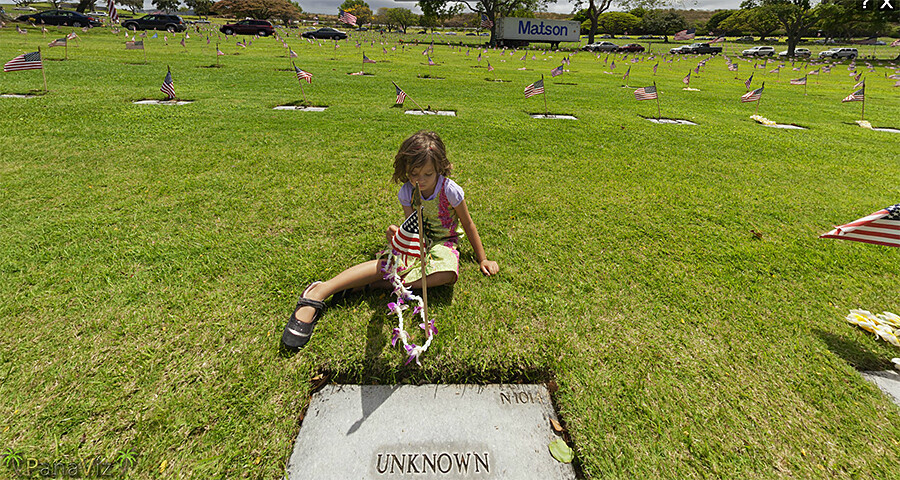
Dave took his panoramic pole when visited Punchbowl on Memorial Day with our 4 Year Old. These pictures were taken after the official memorial day ceremonies had ended.
Punchbowl Memorial History
Punchbowl Cemetery
During the late 1890s, a committee recommended that the Punchbowl become the site for a new cemetery to accommodate the growing population of Honolulu. The idea was rejected for fear of polluting the water supply and the emotional aversion to creating a city of the dead above a city of the living
Punchbowl Cemetery
Fifty years later, Congress authorized a small appropriation to establish a national cemetery in Honolulu with two provisions: that the location be acceptable to the War Department, and that the site would be donated rather than purchased. In 1943, the governor of Hawaii offered the Punchbowl for this purpose.
Punchbowl Cemetery
The $50,000 appropriation proved insufficient, however, and the project was deferred until after World War II. By 1947, Congress and veteran organizations placed a great deal of pressure on the military to find a permanent burial site in Hawaii for the remains of thousands of World War II servicemen on the island of Guam awaiting permanent burial.
Subsequently, the Army again began planning the Punchbowl cemetery; in February 1948 Congress approved funding and construction began.
Punchbowl Cemetery
Prior to the opening of Punchbowl Cemetery for the recently deceased, the remains of soldiers from locations around the Pacific Theater including Wake Island and Japanese POW camps were transported to Hawaii for final interment.
The first interment was made Jan. 4, 1949. The cemetery opened to the public on July 19, 1949, with services for five war dead: an unknown serviceman, two Marines, an Army lieutenant and one civilian noted war correspondent Ernie Pyle. Initially, the graves at National Memorial Cemetery of the Pacific were marked with white wooden crosses and Stars of David like the American cemeteries abroad in preparation for the dedication ceremony on the fourth anniversary of V-J Day.
Eventually, over 13,000 soldiers and sailors who died during World War II would be laid to rest in the Punchbowl.
Punchbowl Cemetery
Despite the Army’s extensive efforts to inform the public that the star- and cross-shaped grave markers were only temporary, an outcry arose in 1951 when permanent flat granite markers replaced them. A letter from the Quartermaster General to Senator Paul Douglas in December 1952, explained that while individual markers are inscribed according to the appropriate religious faith:
Crosses do not mark the graves of the dead of our country in other national cemeteries. No cross marks the burial of our revered Unknown Soldier. From Arlington to Golden Gate, from Puerto Rico to Hawaii, the Government’s markers in national cemeteries for all our hero dead are of the traditional designs'[s]ome are upright and some are flat. None is in the form of a religious emblem.
Punchbowl Cemetery’s Unknown Soldier Grave
The National Memorial Cemetery of the Pacific was the first such cemetery to install Bicentennial Medal of Honor headstones, the medal insignia being defined in gold leaf. On May 11, 1976, a total of 23 of these were placed on the graves of medal recipients, all but one of whom were killed in action.
The Punchbowl has become one of the area’s most popular tourist destinations. More than five million visitors come to the cemetery each year to pay their respects to the dead and to enjoy the panoramic view from the Punchbowl. One of the most breathtaking views of the Island of Oahu can be found while standing at the highest point on the crater’s rim.
Punchbowl Memorial View
In August 2001, about 70 generic unknown markers for the graves of men known to have died during the attack on Pearl Harbor were replaced with markers that included USS Arizona after it was determined they perished on this vessel.
In addition, new information that identified grave locations of 175 men whose graves were previously marked as unknown resulted in the installation of new markers in October 2002.
The National Memorial Cemetery of the Pacific was placed on the National Register of Historic Places in 1976.
Monuments and Memorials
The National Memorial Cemetery of the Pacific contains a memorial pathway that is lined with a variety of memorials that honor America’s veterans from various organizations. As of 2008, there were 56 such memorials throughout the National Memorial Cemetery of the Pacific’most commemorating soldiers of 20th-century wars, including those killed at Pearl Harbor.